Ceylon Cinnamon for Blood Sugar: Why the Jar in Your Cupboard Isn't the Cinnamon of Scripture
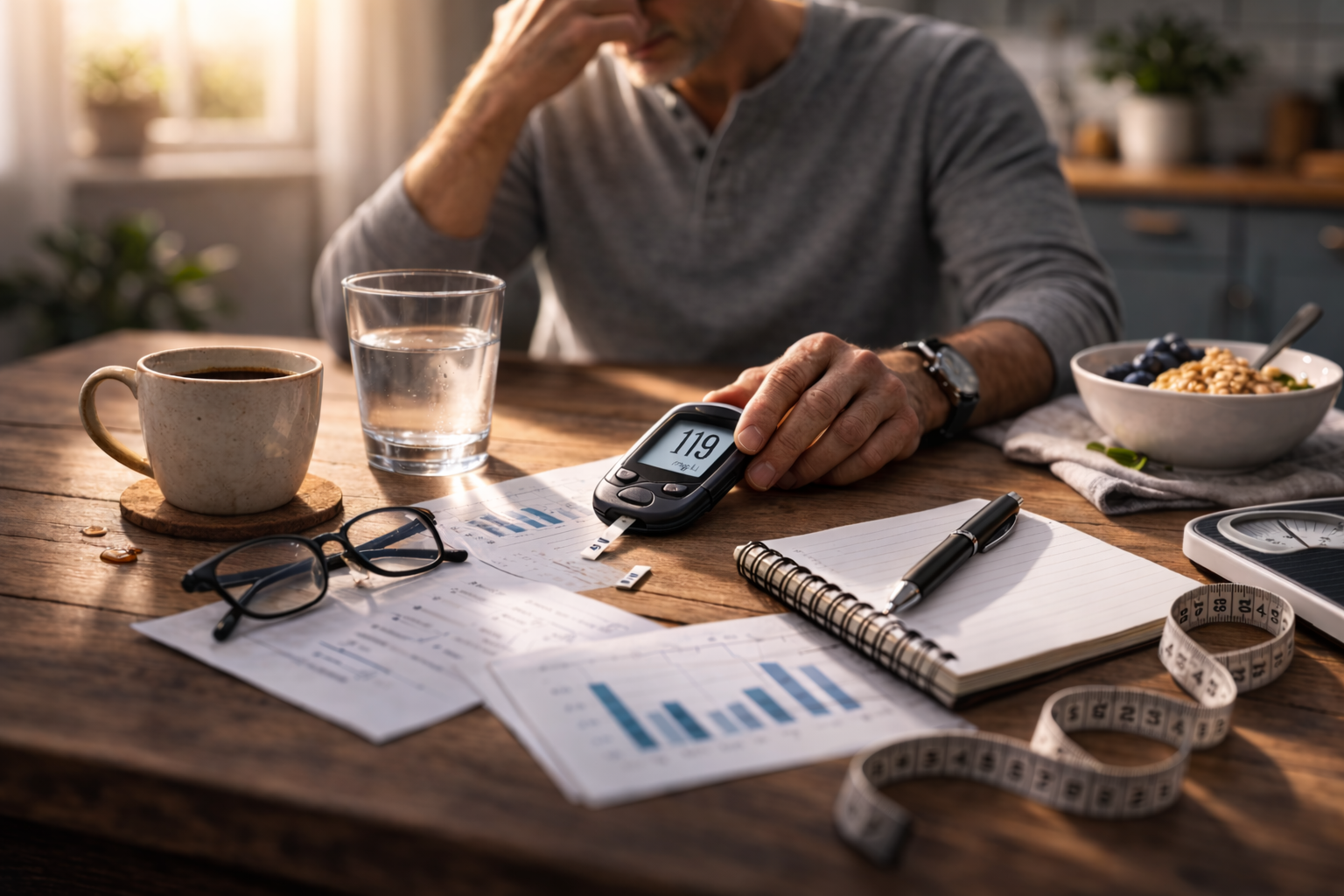
Ceylon cinnamon for blood sugar is not the same thing as the cinnamon in your cupboard. Most ground cinnamon sold in American grocery stores is cassia, a different plant, and a pinch of it on oatmeal is a far cry from how the people who take cinnamon seriously for diabetes actually use it. That gap may be why so many readers have sprinkled faithfully for years and never seen their A1c budge.
Every morning for two years, Bev shook cinnamon over her husband's oatmeal. She had read that cinnamon for diabetes was "one of the old remedies that actually works," and Harold, who hates taking pills, was happy to eat it. The jar was the big one from the warehouse store. They went through three of them.
His A1c went up at every single checkup.
If you have been searching ceylon cinnamon for blood sugar or cinnamon for diabetes, there is a good chance you have a jar like Bev's in your kitchen right now. And there is a question almost nobody asks before they start shaking: is this even the right cinnamon?
Does this sound like you?
- You add cinnamon to your oatmeal, coffee or yogurt because you heard it helps blood sugar
- You have done it for months, maybe years, and your readings look about the same
- You tried cinnamon capsules from the pharmacy and could not tell the difference
- You have no idea whether the jar in your cupboard is Ceylon or cassia
- Your doctor keeps adding to your prescription list, and you were hoping the kitchen could do part of the job
If two or more of those fit, keep reading. You were not wrong to look at cinnamon. You may just have been handed the wrong one, used the wrong way.
The cinnamon in your cupboard is probably not the cinnamon in Scripture
There are two plants sold under the same name. Ceylon cinnamon, from Cinnamomum verum, is often called "true cinnamon." It is lighter in color, rolled in thin, papery layers, milder in taste and more expensive. Cassia is the darker, harder, spicier bark that fills most grocery store jars in the United States, because it is cheaper to grow and ship.
They are not interchangeable. Cassia carries far more coumarin, a natural compound that in large daily amounts can be hard on the liver. That is one reason health authorities in Europe set limits on it, and one reason people who take cinnamon seriously for blood sugar are careful about which kind they use and how much.
And then there is the oldest mention of all. In Exodus 30:23, the recipe for the holy anointing oil calls for "sweet cinnamon," measured out with myrrh and other fine spices. It was precious, it was measured, and it was never a sprinkle. Many readers who grew up in church have told us that this verse is exactly what made them take a second look at the spice rack.
The cinnamon of Scripture was measured and mixed with care. The cinnamon on your oatmeal was shaken out of a plastic jar.
A September recall made a lot of people check their jars
On September 25, 2026, a brand of ground cinnamon sold in New York, New Jersey, Pennsylvania, Texas, Florida and Illinois was recalled after Maryland's health department found elevated levels of lead in it. The product had been on shelves from November 2025 into early September 2026.
It was one brand, and no illnesses had been reported. But it was not the first time cheap ground cinnamon has made the news for the wrong reasons, and it sent a lot of people, Bev included, to the kitchen to read the side of their own jar. Most of them discovered they had no idea what plant it came from, where it was grown, or what else was in it.
That is the real lesson of the recall for anyone with diabetes. If you are relying on a spice to support your blood sugar, "whatever was cheapest at the store" is not a plan.

What you tried, and why it only went so far
- A shake on oatmeal or coffee. Pleasant, harmless in small amounts, and almost certainly cassia. A pinch is a very small amount of anything.
- Cinnamon capsules. Some readers feel they help a little. Many could never find the difference on their meter, and most labels do not say which cinnamon is inside.
- Cinnamon tea or "cinnamon water." Popular on social media. It may be a nice habit. It is hard to know what, or how much, ends up in the cup.
- More of the same. Doubling up on cassia is the one move that can backfire, because of the coumarin.
Research on cinnamon and blood sugar reflects exactly this mess. Some trials show a benefit, others show little, and reviews keep describing the effect on A1c as small and inconsistent. It depends on the type, the dose, the form and how long people stay with it. In other words: cinnamon may help, but the way most of us use it is not the way that has a chance to.
Why sprinkling it on your oatmeal is not what works
This is the part a presentation several readers sent us this fall goes after directly. It follows a researcher, trained at a top university and for years on the inside of the drug industry, who started looking at Ceylon cinnamon after watching someone she loved keep losing ground on every pill she was given. The clue that sent her there did not come from a lab. It came from a church pew and a verse about cinnamon.
Her argument is that the problem behind a climbing A1c is not only the sugar on your plate. She believes something settles in the gut and reaches the pancreas, wearing down the cells your insulin depends on, and that a shake of grocery-store cinnamon was never going to reach it. The kind of cinnamon matters. But so does what it is combined with and how it gets into the body, and that is where her method parts ways with the spice rack entirely.
Exactly what she pairs it with and why she gave up on the powder are things she walks through herself in the presentation. We are not going to give them away here. If you have spent years shaking the wrong jar, you have earned the full explanation, in her words.
Two years of shaking the wrong jar is enough. Find out what the right cinnamon is actually for.
Show me why the oatmeal sprinkle missesHarold and Bev, after the jar went in the trash
Harold is 68, a retired machinist in Lakeland, Florida, type 2 for eleven years, on metformin and, since last spring, a second pill. He does what he is told and does not complain much, which is exactly why Bev worried. "He'd come home from the doctor with a new number and just say, 'Well, I guess I'm old,'" she told us.
The week of the recall, a friend from their Wednesday Bible study, Walt, 71, came by to drop off a casserole dish. Bev mentioned the cinnamon, half laughing. Walt did not laugh. He pulled out his phone and said, "Before you buy another jar, watch this. It's the same verse Pastor read in the spring."
Harold was not interested. "I figured it was somebody selling cinnamon," he said. Bev watched it alone that night. The next morning she sat him down at the kitchen table with his coffee and made him watch the first part. He watched all of it.
"It wasn't the Bible part that got me, honestly," Harold said. "It was the part about why the cinnamon on my oatmeal was never going to do anything. That made sense to a machinist. Wrong part, wrong place. You can't fix a pump by sprinkling oil on the outside of it."
What Harold noticed, and how long it took
- Week 1. No change he could point to. He followed the daily routine from the presentation, kept his medications exactly as prescribed, and Bev started writing his morning readings on the calendar.
- Weeks 2 and 3. A few of the morning numbers came in lower than either of them expected. Not every day. Bev circled those days in green.
- Month 1. More green circles than not. Harold noticed he was not as worn out after lunch, and he had stopped reaching for the candy dish by the front door.
- Months 2 and 3. At his next checkup, his doctor said the number was heading the right way for the first time in years and that they would talk about the second pill at the next visit. Harold asked Bev to write down exactly what the doctor said, word for word.
Why so slow? Because A1c reflects about three months of blood sugar, so nothing honest shows up on the lab sheet in a week or two. Harold and Bev decided before they started that they would give it a full season and judge it by the lab work, not by one good morning. That is the right way to judge anything new. Individual results vary, and no supplement or spice replaces the medication your doctor prescribed.
"Wrong part, wrong place." Harold needed one morning to see it. You may too.
Watch what Walt showed Harold and Bev
Before you watch: who this is for
It may be for you if you have type 2 diabetes or prediabetes, you have tried cinnamon in some form and seen little, and your A1c keeps creeping up even though you are doing what you were told. It is also for the person who shakes the jar over your breakfast every morning, because they have been hoping too.
It is not a reason to stop or change your medication. If you take insulin or anything that lowers blood sugar, talk to your doctor before adding anything new, and keep checking your readings, since your numbers can move. If you have liver problems, are pregnant or nursing, or your readings run very high with heavy thirst or blurry vision, call your doctor first.
Watch it with a pen and paper, and with whoever sits across from you at breakfast. Then decide together.
Before you buy another jar, hear why the cinnamon of Scripture was never meant to be sprinkled.
See the Ceylon cinnamon presentationP.S. Go to your spice rack and pick up the cinnamon. Read the side. If it does not say Ceylon, and it does not tell you where it came from, it is probably the same kind Bev shook over Harold's oatmeal for two years. Here is what they use instead.
Further Reading
What Your 3 P.M. and 9 P.M. Sugar Cravings Are Trying to Tell You
The natural GLP-1 signal most A1c advice skips
The Pancreatic Parasite Theory: What Science Actually Says
The idea behind many of this year's blood sugar presentations
Sources: "Ground cinnamon recalled in select states for potential lead contamination," Gray Media / WOWT, September 25, 2026 (recall reported by the FDA after testing by the Maryland Department of Health). Exodus 30:23. Reader accounts are shared with permission; names and some details have been changed. The views of the researcher featured in the presentation are her own and have not been independently verified by MetabolicDaily.
Medical Disclaimer: This article is for informational purposes only and does not constitute medical advice. Results vary. Statements about supplements have not been evaluated by the Food and Drug Administration, and supplements are not intended to diagnose, treat, cure or prevent any disease. Consult your healthcare provider before starting any supplement, especially if you take medication for blood sugar.