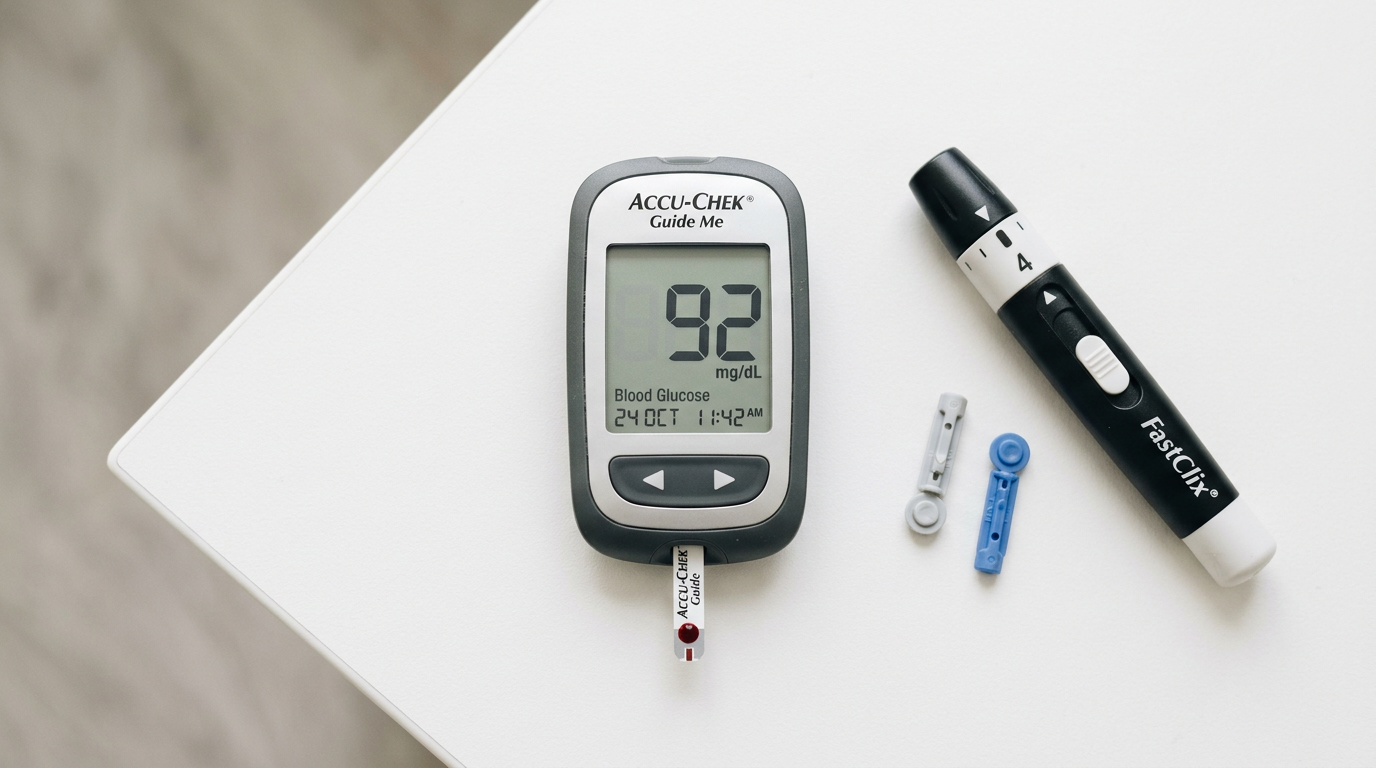
How Blood Sugar Regulation Works in a Healthy Body
Every cell in your body runs on glucose — a simple sugar derived from the carbohydrates you eat. The problem is that glucose cannot enter most cells on its own. It needs a key: insulin, a hormone produced by beta cells in the pancreas.
Here is the sequence in a healthy person after a meal:
- Carbohydrates are digested and glucose enters the bloodstream.
- Rising blood glucose signals the pancreas to release insulin.
- Insulin binds to receptors on muscle, fat, and liver cells — unlocking them to absorb glucose.
- Blood glucose drops back to the normal fasting range (70–99 mg/dL).
- As glucose falls, insulin secretion stops.
This loop runs dozens of times per day, keeping blood sugar within a tight range. The liver also plays a key role: it stores excess glucose as glycogen, then releases it during fasting to maintain stable energy between meals.
The human body has evolved a remarkably precise glucose regulation system — precise enough to maintain blood sugar within a 30–40 mg/dL range even across wildly different meals. When this system fails, the consequences extend far beyond "high sugar."
What Insulin Resistance Actually Means
Insulin resistance is the central mechanism behind prediabetes and type 2 diabetes — yet it is rarely explained clearly to patients.
In insulin resistance, the cells that should respond to insulin — primarily muscle, liver, and fat cells — begin to ignore its signal. The lock stops responding to the key. Blood glucose stays elevated after meals, which prompts the pancreas to produce even more insulin in an attempt to compensate.
For years, this compensation works. Fasting blood sugar appears normal on lab tests. But two things are happening beneath the surface:
- Pancreatic beta cells are being overworked — producing 3–5 times their normal insulin output just to maintain normal glucose levels.
- Post-meal glucose spikes are becoming larger and lasting longer — causing cumulative vascular and nerve damage even when fasting numbers look acceptable.
What causes insulin resistance in the first place? The research points to several converging factors:
- Ectopic fat accumulation — particularly fat inside liver cells (hepatic steatosis) and muscle fibers, which directly blocks insulin signaling pathways
- Chronic low-grade inflammation — inflammatory cytokines (TNF-alpha, IL-6) interfere with insulin receptor function
- Mitochondrial dysfunction — impaired energy metabolism in cells reduces glucose disposal capacity
- Sleep disruption — even one night of poor sleep measurably reduces insulin sensitivity the following day
- Sedentary behavior — muscle is the body's largest glucose sink; inactive muscle becomes insulin resistant
Prediabetes: The Decade Before Diagnosis
Prediabetes is defined as:
| Test | Normal | Prediabetes | Diabetes |
|---|---|---|---|
| Fasting glucose (mg/dL) | 70–99 | 100–125 | 126+ |
| A1C (%) | Below 5.7 | 5.7–6.4 | 6.5+ |
| 2-hr glucose after OGTT | Below 140 | 140–199 | 200+ |
What the table does not show: prediabetes typically exists for 7–10 years before progressing to a formal diabetes diagnosis. During this entire period, the vascular and nerve damage associated with elevated glucose is already accumulating.
Research from the UKPDS (UK Prospective Diabetes Study) found that many type 2 diabetic patients had already lost 50% of their beta cell function by the time of their initial diagnosis. The disease was not "new" — it had been progressing silently for years.
The most dangerous aspect of prediabetes is not the glucose level itself — it is the false reassurance of "normal" fasting labs while post-meal spikes and inflammatory damage are already eroding vascular health.
Type 2 Diabetes: What Changes in the Body
When the pancreas can no longer compensate for insulin resistance — because beta cells become exhausted from years of overproduction — fasting blood glucose rises above 126 mg/dL and the diagnosis of type 2 diabetes is made.
At this point, three concurrent failures are typically present:
- Reduced insulin secretion — beta cells producing less insulin than normal (not none — that is type 1 diabetes)
- Severe insulin resistance in muscle and liver — cells requiring much more insulin per unit of glucose to function
- Elevated hepatic glucose output — the liver continues releasing stored glucose even when blood sugar is already high, because insulin's suppressive signal is being ignored
This combination creates the characteristic "fasting hyperglycemia" of type 2 diabetes — blood sugar that is high even before eating, not just after meals.
What the Numbers Mean: A1C, Fasting Glucose, and Post-Meal Spikes
Understanding your lab values is essential for interpreting what is happening — and what is being missed.
Hemoglobin A1C (HbA1c)
A1C measures the percentage of hemoglobin proteins that have glucose permanently attached to them — a process called glycation. Because red blood cells live approximately 90 days, A1C reflects average blood sugar over the past 2–3 months. It is the primary diagnostic tool for diabetes management.
Important limitation: A1C is an average. A patient whose blood sugar swings wildly between 60 and 300 mg/dL can have the same A1C as someone who stays steadily at 140 mg/dL — but the first patient's vascular damage is far worse due to glucose variability. Research has shown that glucose variability is an independent risk factor for diabetic complications, separate from average glucose levels.
Fasting Glucose
Fasting glucose (measured after 8 hours without food) reflects baseline glucose production by the liver. It is a useful marker but misses the post-meal spikes that accumulate the most vascular damage in early-stage diabetes.
Post-Meal (Postprandial) Glucose
Glucose measured 1–2 hours after eating. The American Diabetes Association targets below 180 mg/dL at 2 hours post-meal for diabetics; optimal metabolic health is generally considered below 140 mg/dL. Most people with prediabetes have normal fasting glucose but spike above 180–200 mg/dL after carbohydrate-heavy meals — damage that fasting-only testing completely misses.
Why Blood Sugar Damages Organs
Sustained elevated glucose does not damage the body by "being sweet." It triggers specific molecular processes that attack blood vessels, nerves, kidneys, and the retina. The four major pathways are:
1. Advanced Glycation End-Products (AGEs)
Glucose binds irreversibly to proteins throughout the body — a process called glycation. The resulting advanced glycation end-products stiffen blood vessel walls, impair kidney filtration membranes, cloud the lens of the eye (contributing to cataracts), and damage nerve myelin sheaths. AGE accumulation is cumulative and largely irreversible.
2. Oxidative Stress
High glucose overwhelms mitochondrial electron transport chains, producing excess reactive oxygen species (ROS). These free radicals damage DNA, endothelial cells lining blood vessels, and the insulation around nerve fibers. This is why antioxidant compounds like alpha-lipoic acid show consistent benefits in diabetic complications research.
3. Microvascular Damage
The small blood vessels supplying the eyes, kidneys, and nerves develop thickened basement membranes and reduce their ability to deliver oxygen. This is the root cause of diabetic retinopathy (vision loss), nephropathy (kidney failure), and peripheral neuropathy (nerve damage).
4. Macrovascular Disease
Large blood vessels develop accelerated atherosclerosis — fatty plaque buildup that narrows arteries and dramatically increases heart attack and stroke risk. People with type 2 diabetes have 2–4 times the cardiovascular risk of non-diabetics, even when glucose is reasonably controlled.
Can Type 2 Diabetes Be Reversed?
Yes — and the evidence is now compelling enough that major diabetes organizations have officially changed their language from "management" to acknowledge "remission" as an achievable goal.
The landmark DiRECT trial (2018, published in The Lancet) found that 46% of type 2 diabetic patients achieved full remission (A1C below 6.5% off all diabetes medication) after one year of intensive dietary intervention. At two years, 36% remained in remission. The key mechanism was significant weight loss reducing ectopic fat from the liver and pancreas — directly reversing the root cause.
Important caveats from the research:
- Remission is most achievable in people diagnosed within the past 10 years and who have not developed significant beta cell damage
- The type of dietary intervention matters less than total calorie reduction and weight loss magnitude
- Exercise independently improves insulin sensitivity even without weight loss — particularly resistance training, which increases muscle glucose uptake
- Sleep optimization and stress management measurably improve A1C through hormonal pathways (cortisol raises blood glucose; poor sleep impairs insulin sensitivity)
Type 2 diabetes is not simply a chronic, progressive condition that must be managed with increasing medication. For many people — especially those diagnosed recently — it is a reversible metabolic state with an addressable root cause.
Evidence-Based Nutritional Support for Blood Sugar
Several compounds have been studied in randomized controlled trials for their effects on glucose metabolism and insulin sensitivity:
Berberine
A plant alkaloid that activates AMPK — the same enzyme pathway targeted by metformin. Multiple meta-analyses show berberine reduces fasting glucose by an average of 20–30 mg/dL and A1C by 0.5–1.0% in people with type 2 diabetes. A 2008 study in Metabolism found berberine comparable to metformin in glycemic control over 3 months.
Chromium Picolinate
Chromium is an essential trace mineral required for insulin receptor function. Deficiency — common in type 2 diabetics — directly impairs glucose disposal. Supplementation at 200–1000 mcg/day consistently reduces fasting glucose and improves insulin sensitivity in clinical trials.
Magnesium
Magnesium deficiency affects an estimated 48% of type 2 diabetics. Magnesium is a cofactor in over 300 enzymatic reactions, including those governing glucose transport and insulin signaling. Studies show that restoring adequate magnesium levels improves fasting glucose and insulin sensitivity, particularly in those who were deficient.
Cinnamon Extract (Standardized)
Standardized cinnamon extract (not cassia cinnamon powder) activates GLUT4 transporters — the glucose channel in muscle cells — independently of insulin. Studies show meaningful reductions in post-meal glucose spikes and modest improvements in fasting glucose at doses of 500–1000mg/day.
Alpha-Lipoic Acid (ALA)
Beyond its well-documented role in neuropathy, ALA improves insulin-stimulated glucose disposal in skeletal muscle. It acts as both an insulin sensitizer and a potent antioxidant — addressing two of the key mechanisms of diabetes-related damage simultaneously.
References: American Diabetes Association Standards of Medical Care 2024 · Lean ME et al. The Lancet 2018 (DiRECT Trial) · UK Prospective Diabetes Study Group, BMJ 1998 · Yin J et al. Metabolism 2008 (Berberine) · Anderson RA. Diabetes Technology & Therapeutics 2006 (Chromium) · Barbagallo M et al. Diabetes Care 2003 (Magnesium) · PDR Health, Cochrane Database 2012 (Cinnamon)