The Best Natural Remedy for High Blood Sugar? Bernie Kept a Whole Shelf of Them. Here's What Her Log Said About Each One
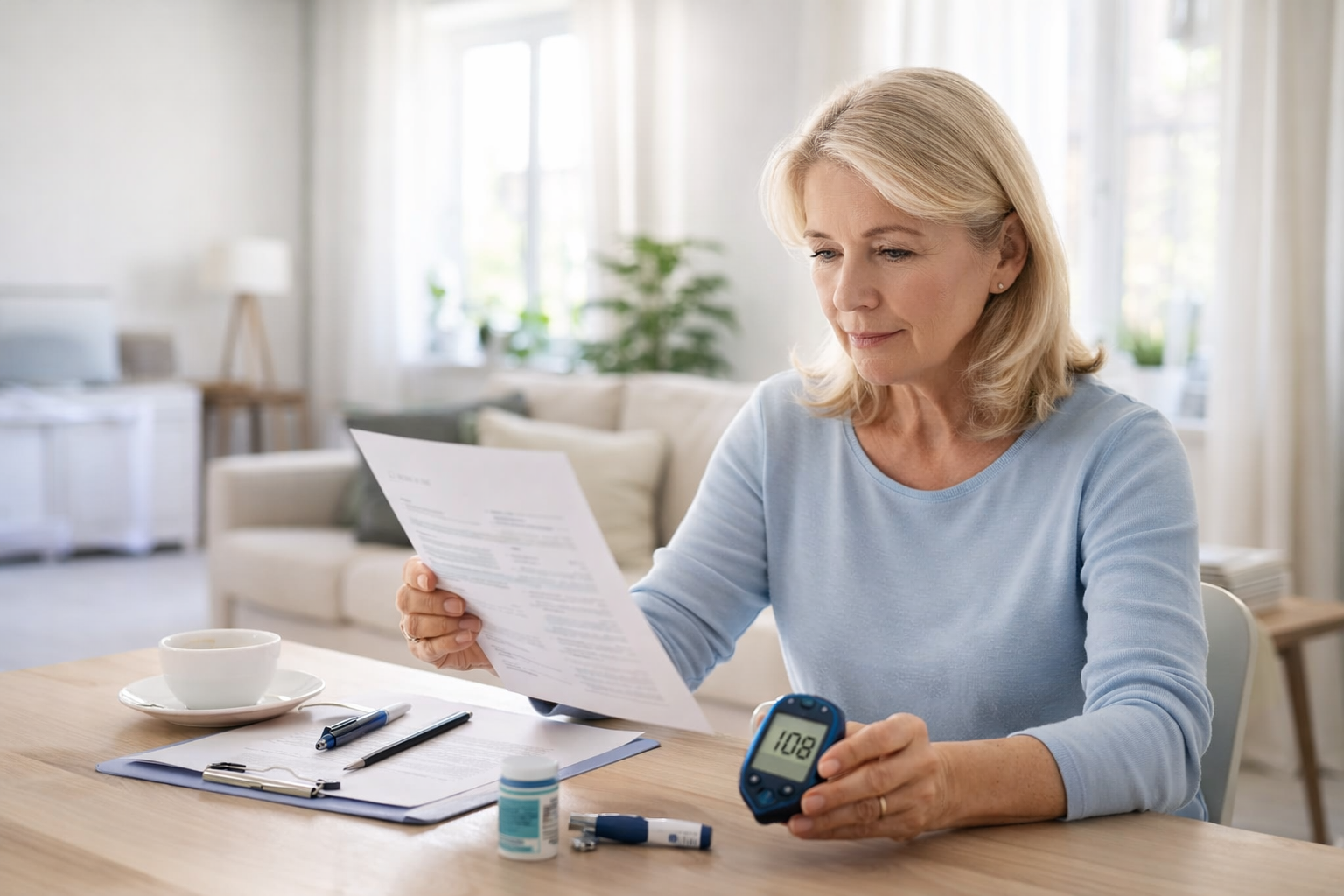
What is the best natural remedy for high blood sugar? The habits with the strongest evidence are not in a bottle: walking after meals, more fiber and protein, fewer refined carbs, better sleep and, for many people, losing some weight. A few kitchen remedies, such as cinnamon and vinegar, have small and inconsistent effects in studies. What most remedy lists skip is why your number drifts up even when you're doing the right things, and that's the question that decides whether any remedy has a chance.
Bernie, 66, spent twenty-nine years behind the counter of a pharmacy in Toledo. She has handed out more blood sugar prescriptions than she can count. So when her own A1c came back 7.6 two years ago, she did not panic. She did research. And within six months she had a shelf above her toaster that she calls, with a straight face, "the apothecary."
Ceylon cinnamon capsules. A bottle of apple cider vinegar with "the mother." Berberine. Bitter melon. A bag of fenugreek seeds. Okra she soaked overnight in a jar. And, after a video her niece sent, a little pot of raw honey for the morning "honey and cinnamon" drink. Eleven bottles and jars in all, each with a strip of masking tape on the lid showing the date she started it.
Being a pharmacy tech, she kept a log. Every remedy, every fasting reading, every afternoon reading, for almost two years. When she finally showed it to us, her September A1c was 7.5.
"I wasn't looking for magic," she said. "I was looking for which one. And the log kept telling me none of them, really."
What Bernie's log said, bottle by bottle
We went through the log with her line by line. Here's what she saw, next to what the research generally shows.
- Ceylon cinnamon. Her fasting readings dipped a few points the first month, then drifted back. Studies on cinnamon are mixed: some show small drops in fasting glucose, others show nothing. If you try it, Ceylon is the safer kind for daily use.
- Apple cider vinegar before dinner. Her after-dinner readings were a little lower on vinegar nights. That matches small studies showing a modest effect on the spike after a starchy meal. It also gave her heartburn.
- Berberine. The biggest effect on her log, and the biggest stomach upset. Berberine has real research behind it, and it can interact with medicines, so it's one to discuss with your doctor first.
- Bitter melon, fenugreek, okra water. Hard to see anything in the numbers. "The okra was the worst week of my life," she added.
- The honey and cinnamon drink. Her readings went up. Honey is still sugar. That one came off the shelf first.
Then she showed us the column that mattered. Next to the readings she'd written a little note most days: "pantry 3 pm," "crackers 9 pm," "hungry again." On the days with the most notes, the readings were highest, no matter which bottle she was on.
The pattern in the margins: every remedy on the shelf was aimed at the number. None of them did anything about the hunger that kept pushing the number up.
If your own shelf has more bottles than your number has points to lose, the remedy may not be the missing piece.
See what the remedy shelf leaves outWhy the number and the hunger travel together
When you eat, your gut sends a signal that tells your pancreas when to release insulin and tells your brain you've had enough. That signal has a name most people only know from weekly-shot commercials: GLP-1. Your body makes its own, and it's one of the quiet reasons some people can eat a slice of bread and move on with their day.
When that natural signal fades, two things happen at once. The insulin your body makes doesn't get used as well, so readings creep up even on careful days. And the "I'm full" message gets softer, so the cravings at 3 p.m. and 9 p.m. get louder. Bernie read that paragraph and tapped the margins of her log. "That's the column," she said. "That's every note I wrote."
A spoonful of cinnamon or a shot of vinegar may trim a spike here and there. It doesn't answer why the signal went quiet in the first place.
The presentation that made sense of the log
Bernie's younger brother, a retired machinist in Michigan with type 2 of his own, sent her a link with the note "watch this before you buy bottle number twelve." It was a presentation by a physician with three decades in medicine whose own wife followed every instruction she was given and still watched her A1c climb until she landed in the hospital.
He talks about the night he stopped asking how to replace what her body wasn't doing and started asking what was stopping it from doing that on its own. He walks through a study of identical twins, same genes, same childhood, only one with type 2. He describes a short morning ritual built around an oil mentioned many times in Scripture, and he's particular about which kind. And he explains why his ritual isn't the honey-and-cinnamon recipe that's been everywhere online. We won't give his routine away here. It's his to explain.
Bernie's verdict: "Twenty-nine years of filling prescriptions and nobody ever said the hunger was part of the number. He said it in the first ten minutes."
The honey drink failed her. The oil ritual is a different idea entirely, and he explains why.
Watch the oil ritual, explained by the doctorBefore you add anything
Keep your medication and your appointments. Walking after meals, fiber, protein and sleep are still the foundation, and they help everything else work. If you take insulin or a pill that lowers blood sugar, ask before adding any remedy, natural or not, because some of them stack with your medicine. If you're constantly thirsty, losing weight without trying, or your vision blurs, call your doctor today.
What replaced the apothecary
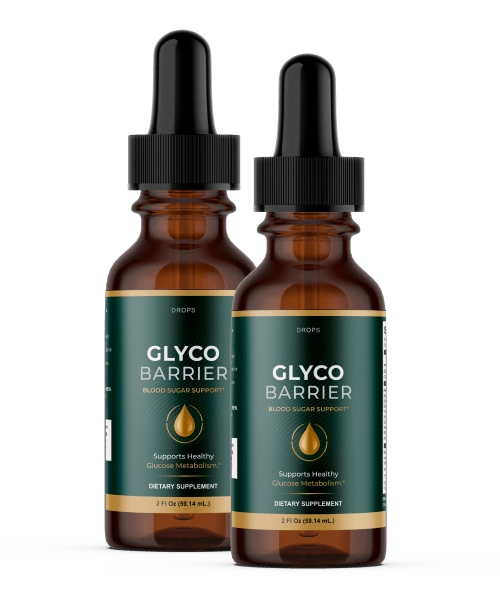
At the end of the presentation is a dropper bottle made to support the body's own blood sugar balance between meals, the hours where Bernie's margins filled up. The one in her kitchen is Glyco Barrier.
Naturally, she read the label like she was checking a prescription. She ran it past the pharmacist she used to work alongside, who checked it against her metformin and said it wouldn't interfere, as long as her doctor knew. Her doctor knows.
- Chromium picolinate. Studied for how well the body responds to its own insulin.
- Gymnema sylvestre leaf. A traditional herb for healthy glucose metabolism, long linked to quieting the pull toward sweets. "My margins," she wrote next to it.
- Green tea leaf. Antioxidants and gentle metabolic support.
- Coleus forskohlii root. Supports how the body uses stored fuel.
- Maca root. Traditionally used for steadier afternoon energy.
Eight of the eleven bottles went into a box in the garage. The drops sit where the honey pot used to be.
- Week 1. Drops morning and evening, a walk after dinner. Nothing in the log worth circling.
- Weeks 2 and 3. Fewer margin notes. Three days in a row with no "pantry 3 pm."
- Month 1. More fasting readings under 130 than over, for the first time in her two-year log.
- Months 2 and 3. The stretch her next A1c is built from. Her draw is in January, and she says she'll judge by the lab, not by one good morning.
Why so gradual? Because an A1c reflects roughly three months of blood, and a fading signal doesn't turn around in a week. Individual results vary, and nothing here replaces your medication or your doctor.
Before you watch: who this is for
It may be for you if you have type 2 or prediabetes, you've tried the kitchen remedies, the cinnamon, the vinegar, the honey, and your number keeps drifting anyway, especially if afternoon or evening cravings feel stronger than your willpower.
Talk to your doctor first if you take insulin or any medicine that lowers blood sugar, you're pregnant or nursing, you have kidney or liver problems, or your readings are running very high with heavy thirst or blurry vision. The order page shows a 60-day satisfaction promise from the date of purchase.
Clear the shelf of what your log already ruled out. Then find out what your body has been asking for all along.
Show me what replaced Bernie's eleven bottlesP.S. Bernie kept one strip of masking tape from the old shelf. It's stuck to the drops now, and it says "started Sept 30." If you've got your own apothecary above the toaster right now, watch what she watched before you buy bottle number twelve.
Further Reading
Olive Oil Drink for Diabetes
Four months of the viral morning glass, and the two questions it skipped
Berberine Not Working for Your Blood Sugar?
Why the strongest remedy on the shelf can still stall
Sources: Allen RW, et al. Cinnamon use in type 2 diabetes: an updated systematic review and meta-analysis. Annals of Family Medicine, 2013. Johnston CS, et al. Vinegar improves insulin sensitivity to a high-carbohydrate meal in subjects with insulin resistance or type 2 diabetes. Diabetes Care, 2004. Yin J, et al. Efficacy of berberine in patients with type 2 diabetes mellitus. Metabolism, 2008. Nauck MA, Meier JJ. Incretin hormones: their role in health and disease. Diabetes, Obesity and Metabolism, 2018. Reader accounts are shared with permission; names and some details have been changed. The views of the physician featured in the presentation are his own and have not been independently verified by MetabolicDaily.
Medical Disclaimer: This article is for informational purposes only and does not constitute medical advice. Results vary. Statements about supplements have not been evaluated by the Food and Drug Administration, and supplements are not intended to diagnose, treat, cure or prevent any disease. Consult your healthcare provider before starting any supplement, especially if you take medication for blood sugar.