How to Reduce Blood Sugar Level Immediately? Marcy's Meter Said 287 After the Church Potluck. What Brought It Down That Night, and the Part Her A1c Was Still Hiding

How do you reduce your blood sugar level immediately? Take the medication exactly as your doctor prescribed (never double a dose on your own), drink a couple of glasses of plain water, and if you feel well, take a gentle 10 to 15 minute walk. Skip the next snack and recheck in an hour or two. If your reading is very high (many care plans use 250 or 300 mg/dL as the line), if you take insulin and your doctor gave you a ketone plan, or if you have vomiting, confusion, fruity breath, deep fast breathing or can't keep fluids down, call your doctor or emergency services right away instead of walking it off. And remember: tonight's spike is one number. Your A1c is the pattern of the last three months, and that's the part a glass of water was never going to reach.
Marcy, 59, counted cash at the same bank branch in Lexington, Kentucky for thirty-one years, and she still balances her checkbook to the penny. So when her meter read 287 at 8:40 on a Sunday night, after the fall potluck at her church and two slices of Mrs. Abernathy's pecan pie, she did what she does with any number that doesn't add up. She sat down at the kitchen counter and typed how to reduce blood sugar level immediately into her phone.
Her husband, Don, stood behind her reading over her shoulder. "Just walk around the block," he said. "That's what your sister does."
He wasn't wrong. But it wasn't the whole answer either, and the whole answer is the reason Marcy is writing to us at all.
What actually helps in the next hour
Here's the part every reliable source agrees on, and it's what Marcy did that night:
- Water, not juice, not diet soda. Two tall glasses. When blood sugar runs high the body pulls water out to flush sugar through the kidneys, and you get thirsty for a reason.
- A slow walk, if you feel okay. Ten or fifteen minutes. Working muscles pull glucose out of the blood without needing much insulin. Marcy and Don walked to the mailbox at the end of Willow Lane and back, twice.
- Your medication as written. Not an extra pill "to catch up." If you use insulin, only the correction dose your doctor set for you.
- No more food for a while, and a recheck in an hour or two.
By 10:15 her meter said 204. By morning it said 168. Don called it a win and went to bed.
When walking is the wrong move: if the reading is very high, if you take insulin and your plan says to check ketones, or if you feel sick (vomiting, confusion, a fruity smell on the breath, breathing hard and fast), exercise can make things worse. That's a phone call to your doctor or 911, not a lap around the block.
The number Marcy couldn't stop thinking about
The 168 bothered her more than the 287. "I hadn't eaten anything since the pie," she told us. "I slept eight hours. Why was I waking up higher than a woman who just had dessert should be by morning?"
That's the question the "lower it fast" articles skip. Water and a walk can shave a spike off one evening. They do nothing about the reason the spike was that tall in the first place, or why the number creeps up again at 4 a.m. while you sleep. Her A1c, 7.4 at her last visit in August, is built from roughly three months of those nights and mornings, every hour of them, not just the ones after pie.
Marcy had already done the sensible things. Metformin with breakfast since 2021. Half a sandwich instead of a whole one. Cinnamon in the oatmeal because a coworker swore by it. It may even have helped a little, but the number on the meter kept telling her the same story: she was doing everything right, and something underneath wasn't listening.

What her friend Irene sent her on Monday
Irene, 66, sat next to Marcy at the teller line for eighteen years. She has had type 2 longer, and she's the one who told Marcy two years ago, "Stop blaming the pie. The pie is just the day you happened to check."
On Monday morning Irene texted her a presentation from a physician with decades of practice behind him. It starts where Marcy was stuck: people who take their pills, watch their plate, walk after supper, and still watch the meter drift. He describes a factor he believes most routine checkups never look at, one that may quietly get in the way of how the body handles its own insulin, hour after hour, including the hours you're asleep.
And then he explains a short routine he makes at home every morning. It's built around olive oil and a couple of things most kitchens already have, and he's particular about the details: which kind of olive oil, what goes in with it, and the time of morning he says matters most. Marcy watched it at the kitchen counter with her coffee going cold. Don watched the last half with her and, for once, didn't say anything about walking around the block.
We're not going to give the routine away here. Partly because it's his to explain, and partly because the "why" is the part that made it click for Marcy, and it doesn't fit in a paragraph.
You can bring down one high reading tonight. If you want to know why the mornings keep coming back high, this is the presentation Irene sent Marcy.
See the morning olive oil routineWhat Marcy keeps on the counter now
Near the end of the presentation, the physician talks about a supplement designed to support healthy blood sugar balance through the whole day, the long stretches between meals and overnight that a walk after dinner never reaches. It's called Glyco Barrier. Marcy did what a bank teller does with anything new: she read every line on the label, wrote the ingredients on an index card, and took the card to her doctor before opening the box. Her doctor told her nothing on it conflicted with her metformin, to keep logging her numbers, and to come back in three months.
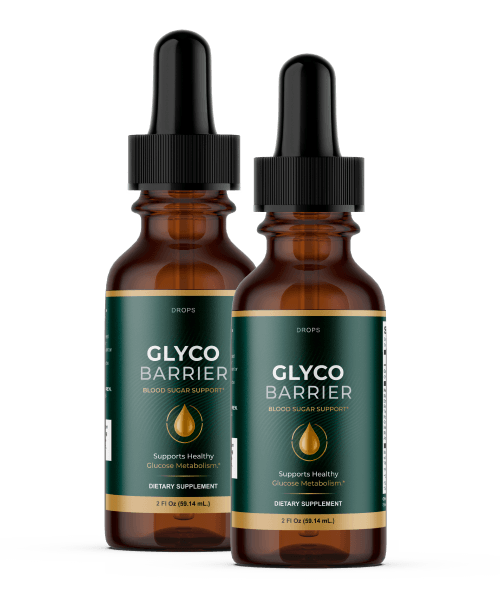
What was on that index card, and why it made sense to her:
- Chromium picolinate. A mineral studied for how well the body responds to its own insulin, the exact thing her mornings seemed to be arguing with.
- Gymnema sylvestre leaf. A traditional herb for healthy glucose metabolism, also known for quieting sweet cravings. "Mrs. Abernathy's pie has never been in more danger," she said.
- Green tea leaf. Antioxidants and gentle metabolic support.
- Coleus forskohlii root. Supports how the body uses stored fuel.
- Maca root. Traditionally used for steadier energy through the afternoon.
What she noticed, week by week
- Week 1. Drops morning and evening, same metformin, same walks to the mailbox. No change she could swear to.
- Weeks 2 and 3. The 160s she used to wake up to started showing up as 140s on most mornings. A few days, not all.
- Month 1. After the next potluck (one slice this time), her bedtime reading was 211 instead of 280-something, and she didn't need two laps.
- Months 2 and 3. Her A1c recheck is in late November. She's not promising herself anything. She's logging every number in the same ledger she used at the bank.
Why does it take that long? Because the A1c is a three-month average written in your red blood cells. Anything aimed at how your body handles its own insulin needs weeks before a lab can see it, which is also why most people who stay with it choose the larger supply instead of a single bottle. Results vary from person to person, and some people will still need more medication. That isn't failure. It's what the medication is for.
Marcy stopped trying to fix Sunday nights one at a time. If your mornings keep starting higher than they should, watch what she watched before you decide anything.
Watch why the mornings stay highWho this is for, and who should wait
It may be for you if you have type 2 or prediabetes, you already know how to bring down one bad reading, and you're tired of the number drifting back up no matter how careful you are.
Talk to your doctor first if you take insulin or any medicine that lowers blood sugar (including metformin), you're pregnant or nursing, you have kidney or liver problems, or your readings often run very high. Never stop or change a prescription to try a supplement. The order page shows a 60-day satisfaction promise from the date of purchase.
Sixty days to see whether your own ledger tells a different story, with the promise printed on the order page.
See what Marcy took to her doctorP.S. Marcy still keeps two glasses of water and her walking shoes by the back door for potluck Sundays. That part works for one night. If you're at your own kitchen counter tonight typing "immediately" into a search bar, watch what Irene sent her on Monday once the number comes down, and take your questions to your doctor the way she did, on an index card.
Further Reading
Blood Sugar High in the Morning?
Why the number climbs while you sleep
Natural Type 2 Diabetes Medication?
What Earl's pharmacist told him before a second pill
Sources: American Diabetes Association, Standards of Care in Diabetes, 2026 (hyperglycemia, sick-day and ketone guidance; physical activity). Centers for Disease Control and Prevention, managing high blood sugar (hyperglycemia).
Medical Disclaimer: This article is for informational purposes only and does not constitute medical advice. Results vary. Statements about supplements have not been evaluated by the Food and Drug Administration, and supplements are not intended to diagnose, treat, cure or prevent any disease. A very high reading or symptoms such as vomiting, confusion or trouble breathing need urgent medical care. Never stop or change a prescribed medication without talking to your doctor.