Is Fasting Good for Diabetics? Frank Skipped Breakfast for Six Weeks. His Morning Number Went Up
Is fasting good for diabetics? It can be for some people. Small studies of intermittent fasting and time-restricted eating in type 2 diabetes have shown weight loss and lower A1c in some participants. But fasting can cause dangerous lows if you take insulin or certain pills (like sulfonylureas), and it doesn't fix everything: many people find their morning number stays high. Talk to your doctor before you fast, especially if you take medicine that lowers blood sugar.
Frank, 64, drove a beer delivery truck in Milwaukee for thirty years and retired last spring with a type 2 diagnosis, a metformin prescription and a pair of knees that told him about every keg. His son-in-law, who is forty and runs marathons, told him in September that intermittent fasting "basically reverses diabetes." So Frank tried it. Black coffee until noon, eat between noon and eight, nothing after. Six weeks, he didn't miss a day.
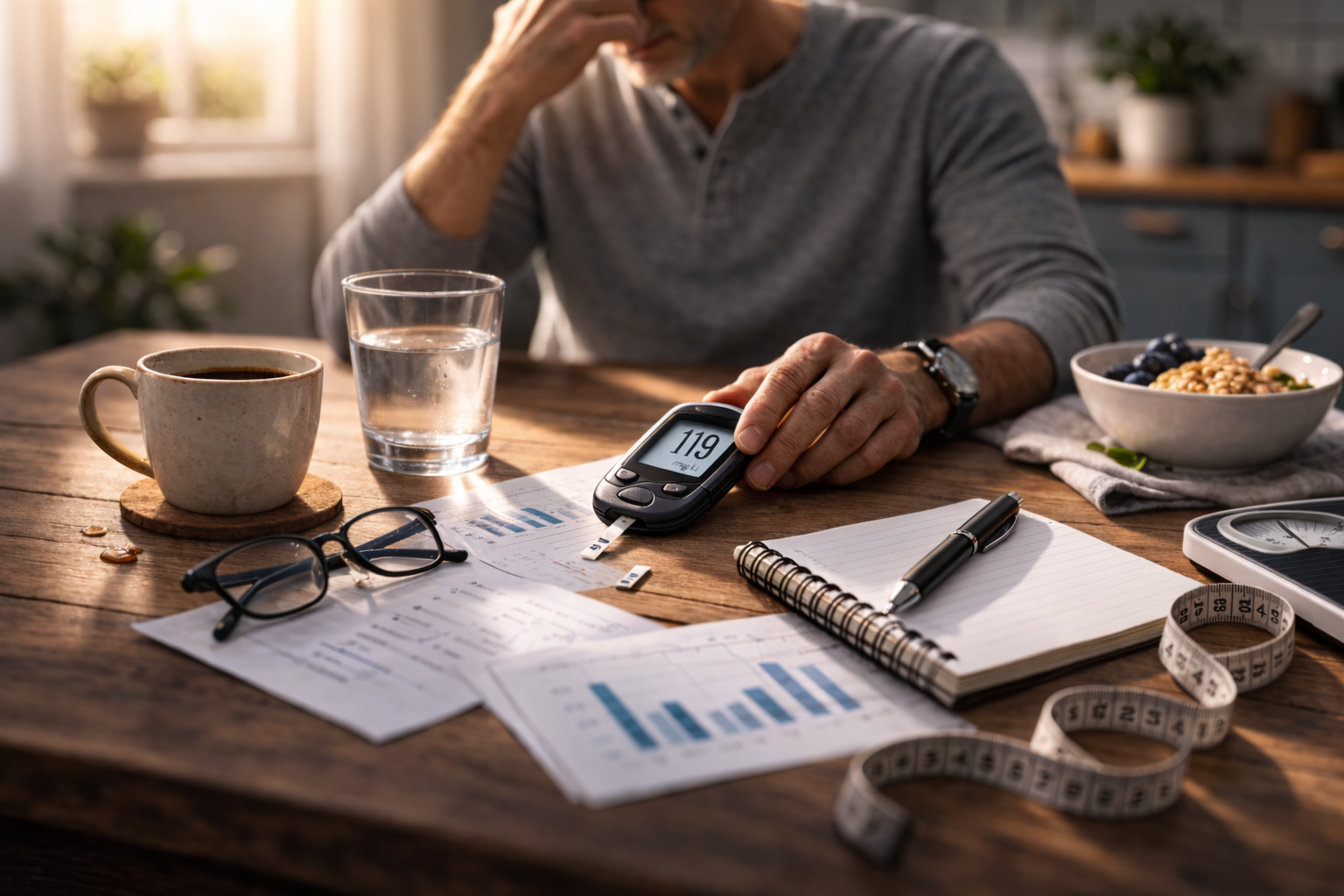
His weight came down six pounds. His afternoon numbers were a little better. And his fasting number in the morning, the one he checks before the coffee, went from the 130s to the high 140s. On Sunday he sat at the kitchen table, looked at a 147, and typed is fasting good for diabetics into his phone. "Because either I'm doing it wrong," he said, "or somebody lied to me."
Is fasting good for diabetics? What the research says
Nobody lied to Frank exactly. The honest answer is "sometimes, for some people, with care":
- Some studies are encouraging. Small trials of time-restricted eating and 5:2-style fasting in people with type 2 have shown weight loss and a lower A1c in some participants, and a few people were able to cut back on medicine under their doctor's supervision. The studies are small and short, and researchers keep calling for bigger ones.
- Lows are the real danger. If you take insulin or pills that push insulin out (like glipizide or glyburide), skipping meals can drop your sugar too low. Doctors usually adjust doses before anyone on those medicines tries fasting.
- The morning number can rise. Before dawn, the body releases hormones that tell the liver to put sugar into the blood to get you ready for the day. Long fasts don't stop that, and for some people a longer stretch without food makes the liver push out even more.
- It doesn't work if hunger wins. Many people make it to noon on willpower and then eat more, and faster, than they would have at breakfast.
Know the warning signs of a low. Shakiness, sweating, a racing heart, confusion or sudden irritability while fasting can mean your sugar is too low. Check it, treat it with fast sugar, and call your doctor. Don't fast while sick, and never stop or change a diabetes medicine on your own.
Frank did it by the book. It helped, but…
Frank gives the fasting some credit. The six pounds are real, and his belt is one notch tighter. His doctor was glad about that. But the clock wasn't the problem it was supposed to solve. By eleven-thirty every morning he was watching the kitchen clock "like the last fifteen minutes of a shift," and at noon he ate two sandwiches instead of one. At 3 p.m. he wanted something sweet. At 7:55 p.m. he was in the pantry, racing the deadline.
"I'm not hungry because I'm fasting," he said. "I was hungry like this before. I ate a full plate and I was hungry again two hours later. The fasting just put a clock on it." That sentence is the most important thing Frank said, and most of the fasting articles skip right past it.
Skipped breakfast for weeks and the morning number still went up?
See what a physician says the fasting window missesThe signal a clock can't fix
Here's what gets lost in the fasting debate. After you eat, your gut releases a natural messenger that does two jobs at the same time: it tells your brain "you're full," and it tells your body "use your insulin now." When that signal is strong, you feel satisfied and the sugar from the meal gets put away. When it fades, you're hungry again soon after eating and the number climbs, even on good days. Fasting changes when you eat. It doesn't bring that signal back.
A physician with thirty years in practice asked the same question about his own wife, whose A1c kept climbing for three years while she followed every instruction, until the night she ended up in the hospital. He stopped asking how to replace what her body wasn't doing and started asking what was keeping it from doing it on its own. His answer runs through a study of identical twins, same genes and same dinner table, where only one had type 2, and what he says he found inside his wife's pancreas. It ends with a short morning step built around an oil mentioned many times in Scripture. It isn't the honey-and-cinnamon recipe, and it isn't a fast.
If skipping meals were the answer, the hunger would have gone quiet.
Watch what he found behind the twin studyWhat Frank keeps by the coffee pot now
The link came from Walt, 70, the neighbor over the fence, who has had type 2 for a dozen years and never once tried a fast. "I eat breakfast like a farmhand," Walt told him. "Watch this before you skip another one." Frank watched it on a Sunday afternoon during the halftime of the Packers game, then watched the rest after the game, which his wife says is the most attention he has given anything that wasn't football.
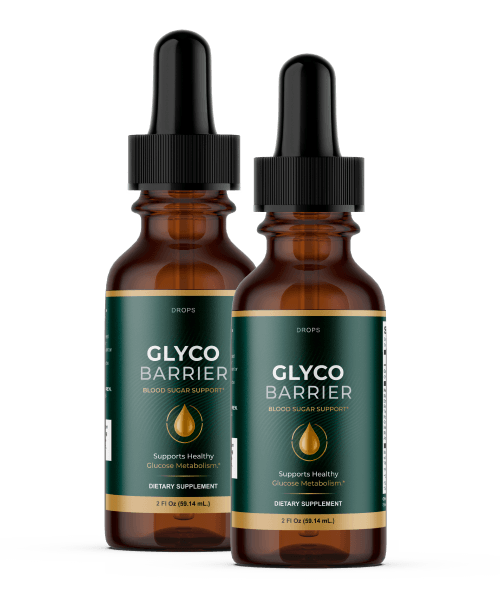
At the end, the presentation introduces Glyco Barrier, a daily formula built to support that natural signal. Frank took his notebook to his doctor, who told him to keep the metformin, to go back to eating breakfast if the fasting made the evenings harder, and that the formula could go alongside everything else as long as he kept checking his numbers.
He's back to breakfast, a small one. What he noticed first, he says, was the 3 p.m. trip to the pantry losing its pull, and a couple of mornings where the number before coffee was lower than it had been all fall. Results vary from person to person, and Frank's next A1c in January will tell him more than any one morning can.
Glyco Barrier doesn't replace your medication, your doctor or your lab work. Ask your doctor before starting it if you take insulin or any medicine that lowers blood sugar, have kidney or liver problems, or are pregnant or nursing, and keep watching for lows.
November is National Diabetes Month. Your next A1c is measuring the weeks you're living right now.
See the morning routine before your next testSo, is fasting good for diabetics?
For some people with type 2, carefully planned fasting or time-restricted eating can help with weight and A1c, and small studies support that. But it's risky if you take insulin or sulfonylureas, it often doesn't fix a high morning number, and it doesn't touch the hunger that comes back two hours after a meal. If you want to try it, plan it with your doctor, adjust medicines first, and check your sugar often. This page is for information only and is not medical advice.
P.S. Frank took the "black coffee only" note off the cabinet and put up a photo of his grandson's peewee football team instead. If you're the one who skipped breakfast for weeks and watched the morning number go the wrong way, watch what Walt sent over the fence, and take your questions to your doctor. And if you've wondered why you got diabetes when your sibling didn't, read Joan's story.
Further Reading
Why Is My Blood Sugar High in the Morning?
The number before coffee, explained
What Really Causes Type 2 Diabetes?
Two sisters, one table, one diagnosis
Sources: American Diabetes Association, Standards of Care in Diabetes (nutrition and hypoglycemia). National Institute of Diabetes and Digestive and Kidney Diseases, Low Blood Glucose (Hypoglycemia). Published small randomized trials of time-restricted eating and 5:2 fasting in adults with type 2 diabetes.
Medical Disclaimer: This article is for informational purposes only and does not constitute medical advice. Results vary. Statements about supplements have not been evaluated by the Food and Drug Administration, and supplements are not intended to diagnose, treat, cure or prevent any disease. Never stop or change a prescribed medication without talking to your doctor.