What Is a Normal A1c for Seniors? Walter's Doctor Said "7.4 Is Fine at Your Age." His Daughter Read the Same Chart and Didn't Agree

What is a normal A1c for seniors? For someone without diabetes, normal is below 5.7% at any age. For older adults who have diabetes, many guidelines allow a looser target: often under 7% to 7.5% for healthy, independent people, and up to about 8% for people who are frail or have other serious conditions, mainly to avoid dangerous lows. Your doctor sets your personal goal. A number that keeps rising year after year is worth a closer look, whatever your age.
Walter, 71, carried mail on the same route in Peoria for thirty-three years. He knows every dog on the east side by name. At his checkup this month his A1c came back 7.4, up from 6.9 the year before and 6.6 the year before that. His doctor looked at it, nodded and said, "That's fine at your age. We don't want you going too low." Walter was relieved.
His daughter Karen, a pharmacy tech, was not. That night she sat down at his kitchen table, typed what is a normal A1c and then "for seniors" into her phone, and turned the screen toward him. "Dad. It's been going up three years in a row. Fine isn't a direction."
What is a normal A1c for seniors?
Your A1c is roughly your average blood sugar over the past two to three months. The basic ranges are the same at every age:
- Below 5.7%: normal, no diabetes.
- 5.7% to 6.4%: prediabetes.
- 6.5% or higher: diabetes range.
What changes after 65 is the target for people who already have diabetes. Because low blood sugar can cause falls, confusion and heart trouble in older adults, many doctors aim a little higher:
- Healthy and independent: often under 7% to 7.5%.
- Several health conditions or some memory or mobility problems: often under 8%.
- Very frail or in poor health: the focus shifts to avoiding both very high and very low readings rather than one number.
So Walter's doctor wasn't wrong. A 7.4 can be an acceptable target for a 71-year-old. But Karen had a point too: the target is a ceiling to stay under, not a reason to stop paying attention when the number climbs every year.
Call your doctor right away for readings over 300, or if you feel confused, very thirsty, sick to your stomach or short of breath. If you take insulin or a pill that can cause lows, never cut back on food or change your medicine without asking first. A low can be more dangerous than a high after 65.
Walter did the sensible things. They help, but…
Walter isn't careless. He takes his metformin with breakfast every morning. He still walks two miles a day, the old route, out of habit. He switched to diet soda in 2019 and gave up the Friday donuts when he retired. Every one of those things matters, and his doctor told him to keep doing them.
And still 6.6, 6.9, 7.4. "I do the same things every year," he said. "The number does whatever it wants."
What bothered Karen most was something Walter said almost as a joke: that he gets hungry at nine every night, "like clockwork," even after a full supper, and that his morning number is usually higher than his bedtime number, even though he hasn't eaten a thing in between.
Doing everything the same and the A1c still climbing every year?
See what a physician says the target chart leaves outWhy a number can climb when nothing else changes
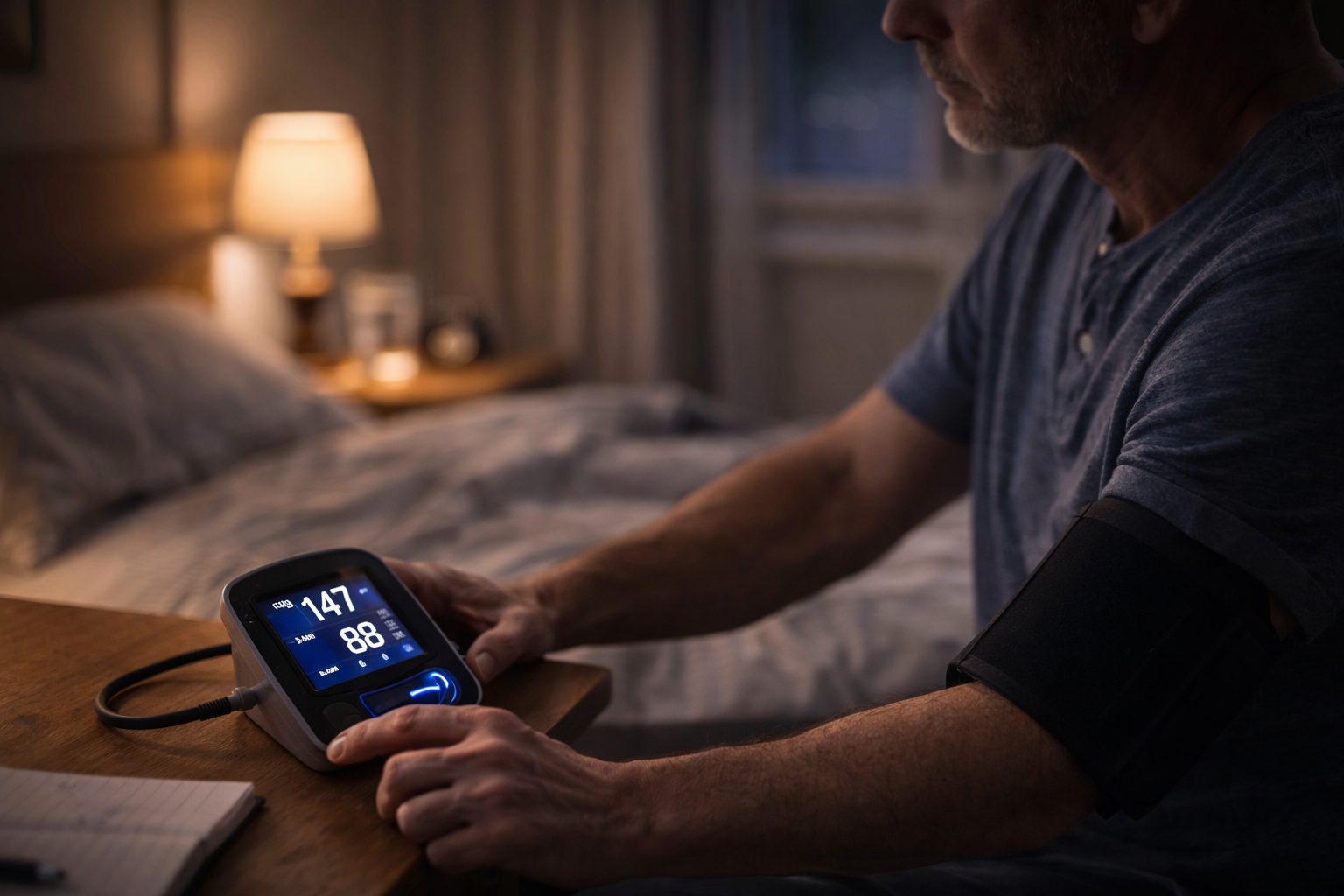
Here's a piece the target chart doesn't show. After a meal, your gut sends out a natural messenger that does two jobs: it tells your brain you're full, and it helps the insulin your body still makes actually get used. As we get older, and after years of higher blood sugar, that signal can fade. When it does, two things tend to show up together: hunger that comes back too soon, and a number that drifts up even when your habits haven't changed.
That was Walter. The 9 p.m. refrigerator. The higher morning reading. The A1c going up a few tenths a year while he did exactly what he'd always done.
A physician with thirty years in practice, who watched his own wife's A1c climb while she followed every instruction, explains in a free presentation how he stopped focusing only on the number and started asking what was keeping her body from using its own insulin. The short home routine he built uses an ingredient that's named in Scripture more than thirty times. Which one, which kind, and the time of morning it's used, he explains himself. And it isn't the honey-and-cinnamon recipe going around Facebook.
The 9 p.m. hunger and the higher morning number may come from the same place.
Watch the morning routine Karen foundWhat's next to Walter's coffee now
Karen didn't argue with the doctor. She sent Walter the link and said, "Watch it, write down what you want to ask, and bring it to your next visit." He watched it twice at the kitchen table, the same way he used to read the route changes, with a pencil.
At the end, the presentation introduces Glyco Barrier, a daily formula made to support that natural signal. Walter took the label and his questions to his doctor's nurse line. They told him to keep his metformin and his walks, watch for lows, and recheck in three months. He started the next Monday.

His next A1c is in late January. What he noticed in the first weeks was the 9 o'clock trip to the refrigerator getting easier to skip, and a few mornings where the meter read lower than the night before for the first time he could remember. Results vary from person to person, and Walter keeps every reading in the notebook for his doctor.
Glyco Barrier doesn't replace your medication, your doctor or your lab work. Ask your doctor before starting it if you take insulin or any medicine that lowers blood sugar, have kidney or liver problems, or take several daily medicines. The order page shows a 60-day satisfaction promise from the date of purchase.
November is National Diabetes Month. If your number has been creeping up a few tenths every year, the next checkup is already being written.
See the routine before your next A1cSo, what is a normal A1c for a senior?
Below 5.7% is normal for anyone without diabetes. For older adults with diabetes, a target of under 7% to 8% is common, depending on your health, and it's set by your doctor to keep you safe from lows. Stay under your target, watch the direction over the years, and bring the trend, not just the latest number, to your next visit.
P.S. Walter's notebook has a new column now, next to the A1c results. Karen labeled it "direction" and drew an arrow pointing down with a question mark. If your number has been going up while your doctor says it's fine, watch what Karen sent her dad, and take your questions to your doctor.
Further Reading
What Is A1c?
What the number measures, in plain words
3 Ingredient Recipes for Diabetics
Forty saved recipes, and the one that mattered wasn't dinner
Sources: American Diabetes Association, Standards of Care in Diabetes, 2026 (glycemic goals; older adults). Centers for Disease Control and Prevention, All About Your A1C.
Medical Disclaimer: This article is for informational purposes only and does not constitute medical advice. Results vary. Statements about supplements have not been evaluated by the Food and Drug Administration, and supplements are not intended to diagnose, treat, cure or prevent any disease. Never stop or change a prescribed medication without talking to your doctor.