What Is A1c, Really? Rosalind's Meter Said 112 Every Morning. Her Lab Sheet Said 7.6. Here's Which One Was Telling the Truth
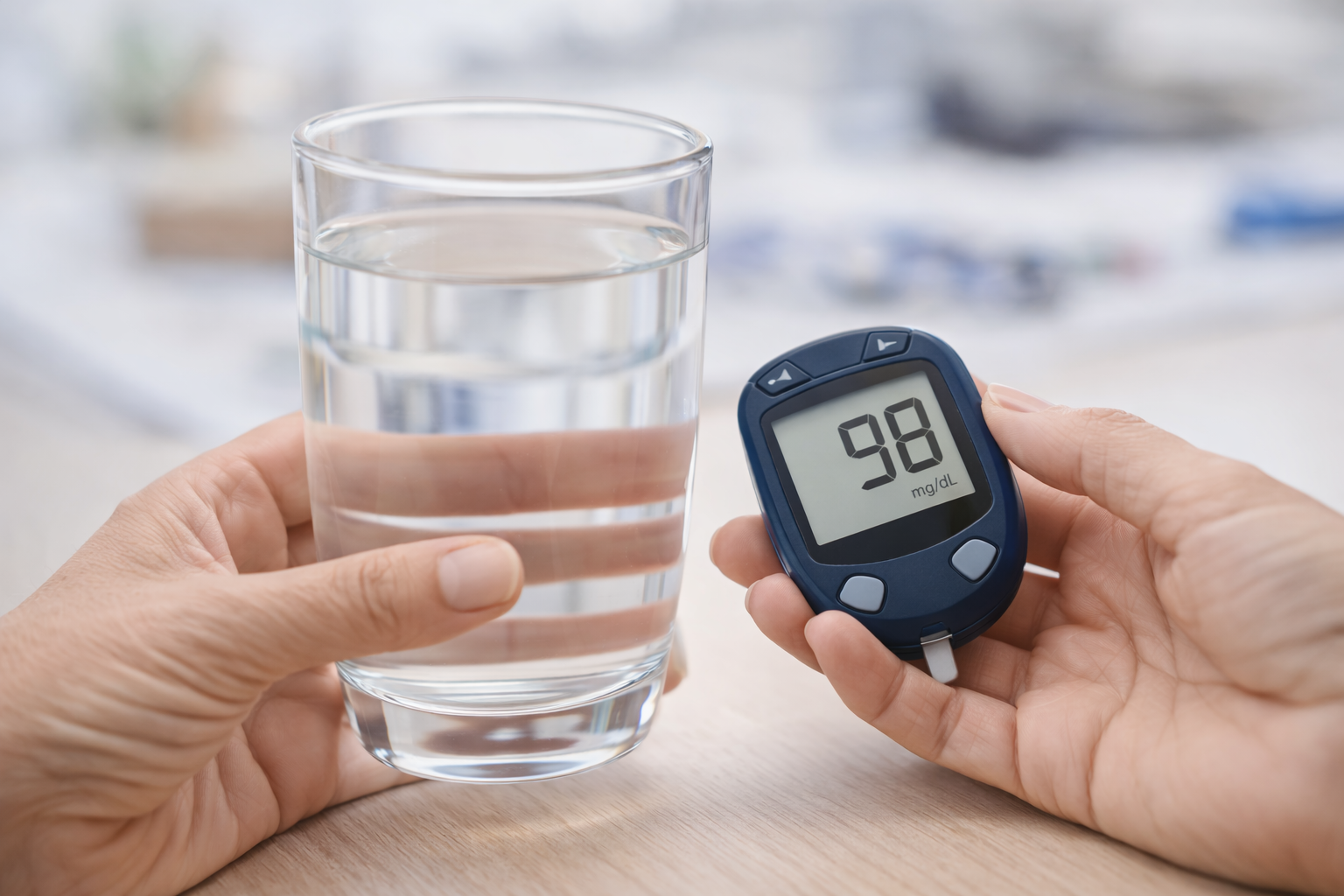
What is A1c? It's a blood test that shows your average blood sugar over roughly the past two to three months, by measuring how much sugar has stuck to your red blood cells. Under 5.7% is considered normal, 5.7% to 6.4% is prediabetes, and 6.5% or higher on two tests means diabetes. Many adults with type 2 aim for under 7%, but your doctor sets your target. Because it's an average of every hour, day and night, it can be high even when your morning readings look good.
Rosalind, 59, plays the organ at a Methodist church in Shreveport, Louisiana, and she is the most organized person anyone in her choir knows. Type 2 for four years. Metformin with breakfast and supper. A meter by the coffee maker and a little spiral notebook where every morning number goes, in pen. For most of this year those numbers were 108, 112, 114, 110. "I was proud of that notebook," she told us.
Then in July her doctor's office posted her lab results online. A1c: 7.6. Higher than the spring. She sat at the kitchen table looking from the notebook to the screen and back again, and then she typed the question we get more than almost any other: what is A1c, and how can it be high if my sugar is fine every morning?
Here's the plain answer, why the two numbers disagreed, what a trial published in October found when people could finally see the hours they'd been missing, and the question Rosalind's notebook was never built to answer.
What A1c actually measures
Sugar in your blood sticks to hemoglobin, the protein inside your red blood cells. The more sugar floating around, the more sticks. Red blood cells live about three months, so when the lab measures how much of your hemoglobin is "sugar-coated," it's reading a running record of the last two to three months. That's the percentage on your sheet.
- Under 5.7%: the normal range.
- 5.7% to 6.4%: prediabetes.
- 6.5% or higher (confirmed): diabetes.
- Around 7%: a common target for adults with type 2, though your doctor may set yours higher or lower.
Roughly speaking, every point of A1c is about 30 points of average blood sugar. A 7.6 works out to an average somewhere around 170, around the clock. Rosalind's notebook said 112.
Why the meter and the lab disagreed
Her meter wasn't lying. It was just taking one picture a day, at the same moment, at the calmest point of her day. The A1c sees every hour, including the ones nobody looks at:
- After meals. A plate of red beans and rice can push a reading well over 200 for a couple of hours, then fall back by bedtime. The morning check never sees it.
- The afternoon. Rosalind's choir practice snack, a cookie and a sweet coffee at 4, lived entirely between checks.
- The middle of the night. Some people run high for hours while they sleep.
A trial published this month in the New England Journal of Medicine, run in 22 U.S. primary care practices, showed how much those unseen hours matter. Adults with type 2 who weren't on insulin were given continuous glucose monitors, the little sensors that read sugar all day and night. Over 26 weeks they spent about five more hours a day in their target range than people getting routine care, their A1c improved by nearly a point more, and almost twice as many got under 7%. Nobody gave them a new drug. They simply saw what had been happening between the checks.
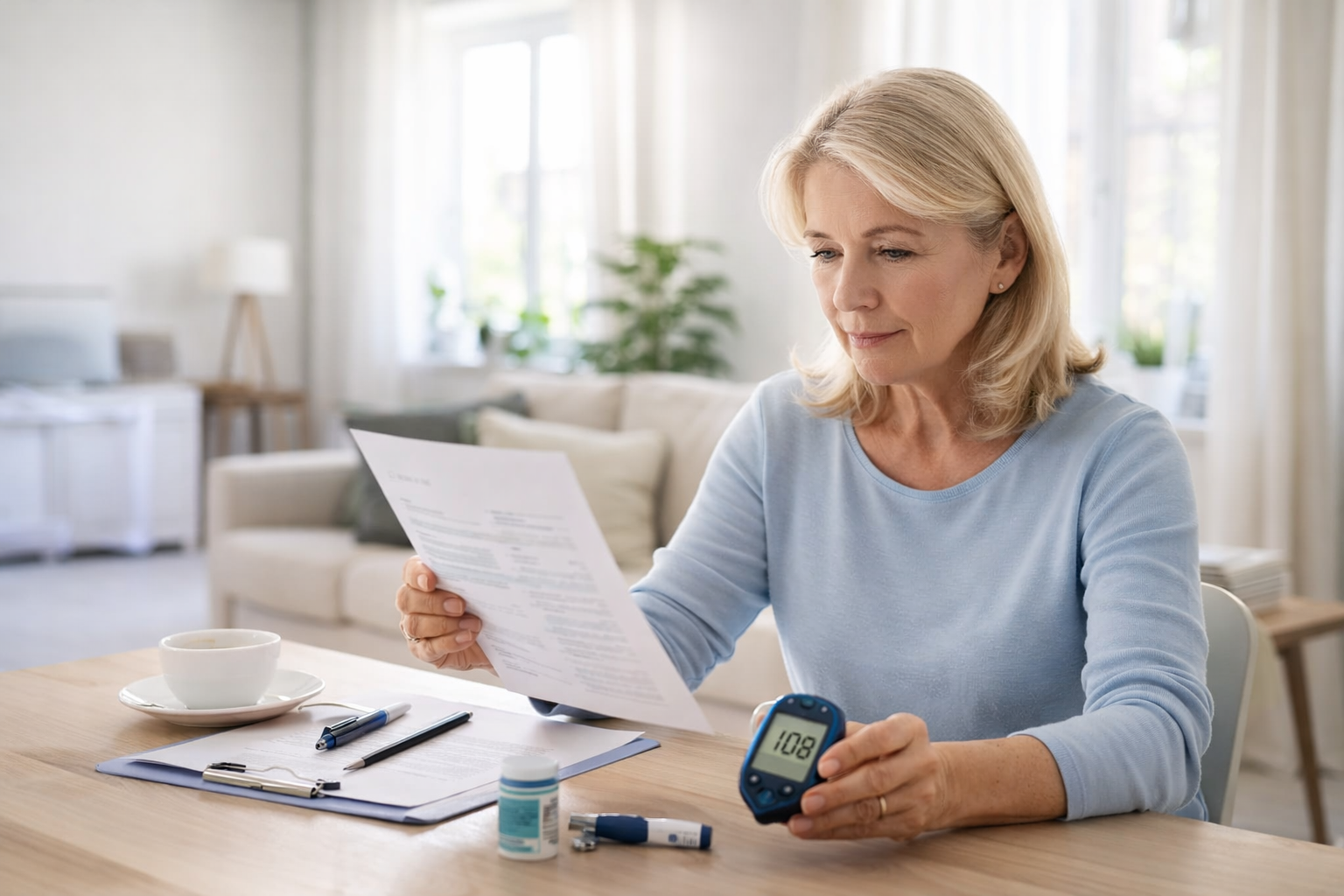
If your mornings look fine and your A1c keeps climbing anyway, a physician explains what may be happening in the hours you don't check.
See what the morning check never showsThe question the notebook never asked
Seeing the hidden hours is step one. Rosalind asked her doctor for a sensor and wore one for two weeks. Sure enough: 210 after supper most nights, 190 after choir practice, slow to come back down. The number wasn't one bad habit. It was her body taking a long time to put sugar away after every meal.
Which raises the question nobody had put to her in four years: why? Why does sugar linger after a meal in one person and clear in another eating the same plate? Part of the answer may be a signal your gut sends after you eat, called GLP-1, that tells your body to release insulin on time and tells your brain you've had enough. You know the name from the weekly-shot commercials, but your body makes its own. When that natural signal fades, sugar lingers after meals and the afternoon cravings get louder. That was the 4 o'clock cookie exactly.
This month, the American and European diabetes associations updated their joint guidance on type 2, with a stronger push to act early and look beyond the blood sugar number alone. It's the same idea from the other direction: the number is the result, not the reason.
The presentation from the soprano section
The answer came from the choir loft. Mavis, 66, has sung soprano next to Rosalind's organ bench for eleven years, and she noticed the cookie disappear from practice in August. "Sensor?" she asked, pointing at Rosalind's arm. Then she said she'd been through the same thing two years before, morning numbers fine, A1c stuck, and that a video her nephew sent was the first thing that explained why.
It's a presentation from a physician who taught the standard advice for decades, until someone close to him kept getting worse no matter how closely they followed it. He describes a factor the usual checklist doesn't check for, one that interferes with how the body uses its own insulin, and a short morning routine built around a particular oil. He's exact about the kind and the timing, and he spends a while on why it's not the honey-and-cinnamon thing going around online. We won't try to summarize it; it's better in his words.
Rosalind watched it on her tablet after Wednesday rehearsal, in the empty sanctuary. "Four years of writing down the wrong hour," she said. "And nobody ever asked why my body was slow."
Your A1c is the sum of every hour. This is the explanation Mavis gave Rosalind in the choir loft.
Watch the presentation Mavis sharedBefore you add anything
Keep your medicine and your appointments. If you take insulin or any pill that can cause lows, talk to your doctor before adding anything that affects blood sugar, and check more often for the first few weeks. A sensor or more frequent checks after meals can show you what your A1c is made of. If your readings are running very high or you feel unwell, call your doctor today.
What sits next to Rosalind's notebook now
At the end of the presentation the physician talks about a dropper bottle made to support the body's own blood sugar balance, including the stretch after meals where Rosalind's numbers lingered. The one beside her coffee maker is Glyco Barrier.
She read the label the way she reads a new hymn, all the way through before playing a note, then called her pharmacy to ask whether anything on it would fight with her metformin. They said no, and told her to keep logging.
- Chromium picolinate. Studied for how well the body responds to its own insulin. She wrote "the slow part" next to it.
- Gymnema sylvestre leaf. A traditional herb for healthy glucose metabolism, long linked to quieting the pull toward sweets. "4 p.m. cookie," she wrote.
- Green tea leaf. Antioxidants and gentle metabolic support.
- Coleus forskohlii root. Supports how the body uses stored fuel.
- Maca root. Traditionally used for steadier afternoon energy.

- Week 1. Drops morning and evening, sensor still on. Nothing to report, and she reported that too.
- Weeks 2 and 3. The 4 o'clock pull got quieter. Two practices in a row, she forgot the cookie existed.
- Month 1. Her after-supper numbers mostly in the 160s instead of over 200, and back down faster.
- Months 2 and 3. The stretch her next A1c will be built from. She's not celebrating early, and she wanted us to say so.
Why so slow? Because an A1c is three months of blood. Even if every hour improved tomorrow, the lab sheet would take weeks to catch up. Individual results vary, and some people will need more help from their doctor no matter what they do.
Before you watch: who this is for
It may be for you if you have type 2 or prediabetes, your morning readings look fine or close to it, and your A1c keeps coming back higher than you expect, especially if afternoons or evenings are when the cravings win.
Talk to your doctor first if you take insulin or any medicine that lowers blood sugar, you're pregnant or nursing, you have kidney or liver problems, or your readings are running very high. The order page shows a 60-day satisfaction promise from the date of purchase.
Four years of good mornings didn't move Rosalind's A1c. If your notebook looks like hers, this is where she found out why.
See what's next to Rosalind's notebookP.S. Rosalind still writes her morning number in pen every day. Under it, now, there's a second line for after supper, and she says that line is the one she's proudest of. If you're looking at a lab sheet tonight that doesn't match your notebook, start with the presentation Mavis shared.
Further Reading
How to Reduce A1c Before Insulin
What to do with the months before the word "insulin" comes up
Olive Oil and Cinnamon for Diabetes
Six weeks of the morning spoon, and the question it never answered
Sources: Continuous glucose monitoring in adults with type 2 diabetes not using insulin in primary care, New England Journal of Medicine, reported by University of Colorado Anschutz via Medical Xpress, October 17, 2026. ADA/EASD consensus report on the management of hyperglycemia in type 2 diabetes, update reported October 7, 2026. American Diabetes Association, Standards of Care in Diabetes, 2026.
Medical Disclaimer: This article is for informational purposes only and does not constitute medical advice. Results vary. Statements about supplements have not been evaluated by the Food and Drug Administration, and supplements are not intended to diagnose, treat, cure or prevent any disease. Consult your healthcare provider before making changes to your health routine or medications.