The Biblical Olive Oil Drink for Diabetes: Loretta's Bible Study Passed the Recipe Card Around for a Month. Here's the Verse Everyone Skipped
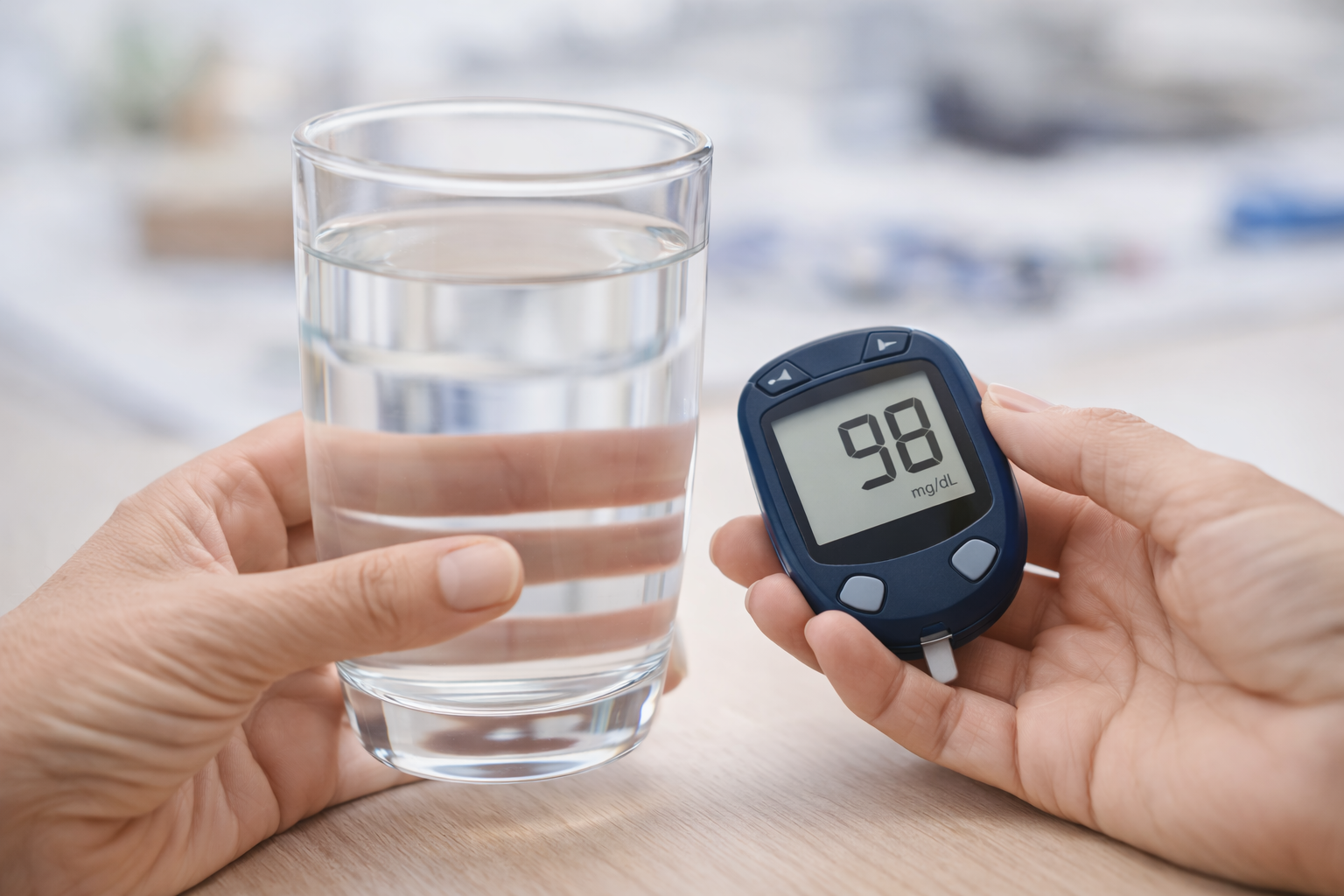
Does the biblical olive oil drink help diabetes? Olive oil is a healthy fat, and people who eat more extra-virgin olive oil as part of a Mediterranean-style diet tend to have lower rates of type 2 diabetes. A spoonful in warm water won't lower an A1c by itself, and there's no study of the "biblical drink" as a recipe. What most versions of the recipe skip is why your number climbs in the first place, and that's the part that decides whether any morning ritual can help.
Loretta, 71, has led the Wednesday morning women's Bible study at her church in Macon, Georgia, for nineteen years. Eleven women, one long table in the fellowship hall, a pot of decaf and a plate of something nobody with diabetes should be eating. Six of the eleven have type 2 or prediabetes, Loretta included. Her A1c was 7.8 in the spring.
In September, a friend named Pearl came in with a stack of index cards. Somebody had shared a video on Facebook about a biblical olive oil drink for diabetes, and Pearl had copied the recipe out by hand, eleven times, in her beautiful Palmer-method cursive. A tablespoon of olive oil in warm water every morning, a squeeze of lemon, a dash of cinnamon. "It's in the Bible," Pearl said, sliding the cards down the table. "Oil of gladness."
Loretta took her card home and taped it inside the cabinet over her coffee maker. She did it every morning for a month. So did most of the table. And because Loretta has kept a prayer journal since 1981, she kept her readings in the back of it.
What a month of the recipe card did
At the end of September, the women compared notes over the decaf. Here's what Loretta's journal showed, and what the others reported.
- Morning readings: Loretta's stayed between 140 and 165, the same range as August. Two women saw a few points lower. One saw higher, and admitted she'd been taking the drink with a honey bun.
- Fullness: A couple of the women said the oil kept them fuller until lunch. That's not imagined: fat slows digestion.
- Stomach: Pearl's sister quit after a week. "Oil on an empty stomach and I'm in the ladies' room by nine."
- The 3 p.m. craving: unchanged, for everybody. That's the line Loretta underlined twice.
"Nobody got worse, except the honey bun," Loretta told us. "But nobody's number moved like the video said it would. And we're all still standing in front of the pantry at three o'clock."
If you've had the oil every morning and you're still at the pantry by 3 p.m., the recipe card may be missing a page.
See the part the recipe card leaves outWhat Scripture says about olive oil, and what it doesn't
Loretta, being Loretta, made it a study. Olive oil is all through the Bible. It fueled the lamps in the tabernacle. It was poured to anoint kings. The Promised Land is described as a land of olive oil and honey in Deuteronomy. In Exodus, the holy anointing oil is olive oil blended with spices, including cinnamon, which is probably where the recipe card's dash came from. The Good Samaritan pours oil on a stranger's wounds. In James, the elders anoint the sick with oil and pray.
"It's a blessing and it was medicine to them," Loretta said. "But you'll notice nobody in Scripture is drinking it in warm water at six in the morning. That's Facebook."
That's the verse everyone skipped: the oil in those stories is part of a whole life, a whole table, a whole way of eating. It's not a one-spoon fix.
What the research actually supports
Here's the fair picture. In large studies, people who eat more extra-virgin olive oil, usually as part of a Mediterranean-style diet with vegetables, beans, fish and nuts, tend to have a lower risk of developing type 2 diabetes, and some trials show modest improvements in blood sugar control. One review found the benefit leveled off at about one to one-and-a-half tablespoons a day. Using olive oil instead of butter and fried foods is a good trade for almost anyone.
What there isn't: a study showing that a tablespoon of oil in warm water each morning lowers an A1c on its own. And a tablespoon is about 120 calories, so piling it on top of everything else isn't free.
Why the number and the 3 p.m. pull are the same problem
When you eat, your gut releases a messenger that does two jobs at once. It tells your pancreas to release insulin at the right moment, and it tells your brain you've had enough. That messenger is GLP-1. Most people only know the name from the weekly-shot commercials, but your body makes its own, at every meal.
When that natural signal fades, two things happen together. The insulin your body makes doesn't get used as well, so readings creep up even on careful days. And the "I'm full" message gets quieter, so the afternoon and evening cravings get louder. That was every woman at the table. Same number problem, same 3 p.m. problem, one signal underneath both.
A spoonful of oil in warm water doesn't ask why that signal went quiet. That's the question Loretta wanted answered.
The presentation Pearl's grandson found
It was Pearl, of all people, who brought the answer to the next Wednesday. Her grandson, a nursing student in Atlanta, told her the recipe card was "half a thought" and sent her a presentation instead. It's by a physician with three decades in medicine whose own wife did everything her doctors told her and still ended up in the hospital with her A1c climbing.
He talks about the night he stopped asking how to replace what her body wasn't doing, and started asking what was stopping it from doing that on its own. He explains why the oil in Scripture matters to him, which kind he uses and why the bottle on most grocery shelves isn't it, and how it fits into a morning ritual that is not the honey-and-cinnamon version going around online. He ties all of it back to that natural signal. We won't lay out his ritual here. It's his to explain, and the women agreed he explains it better than any index card.
Loretta watched it on the fellowship hall TV with all eleven women. "When he got to the part about his wife," she said, "Pearl reached over and held my hand."
The recipe card was half a thought. A doctor whose own wife was in the hospital explains the other half.
Watch the oil ritual the Bible study watchedBefore you add anything
Keep your medication and your appointments. Olive oil in place of other fats is a fine change for most people. If you take insulin or a pill that lowers blood sugar, ask before adding any remedy, natural or not, because some stack with your medicine. If you have gallbladder problems, ask before taking oil on an empty stomach. And if you're constantly thirsty, losing weight without trying, or your vision blurs, call your doctor today.
What sits next to Loretta's prayer journal
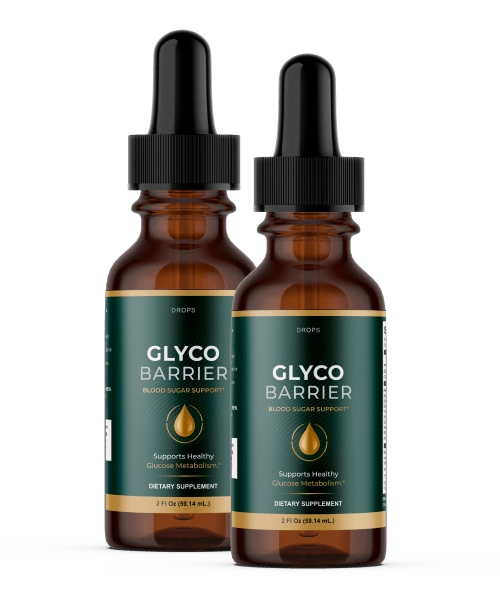
At the end of the presentation is a dropper bottle made to support the body's own blood sugar balance between meals, the hours where every woman at that table met her 3 p.m. pull. The one beside Loretta's prayer journal is Glyco Barrier.
Loretta doesn't start anything without asking two people: the Lord and her doctor. She prayed about it on Wednesday and called her doctor's nurse line on Thursday. The nurse checked the label against her metformin and blood pressure pill and said it was fine as long as it was on her chart. It's on her chart.
- Chromium picolinate. Studied for how well the body responds to its own insulin.
- Gymnema sylvestre leaf. A traditional herb for healthy glucose metabolism, long linked to quieting the pull toward sweets. "Three o'clock," she wrote beside it in the journal.
- Green tea leaf. Antioxidants and gentle metabolic support.
- Coleus forskohlii root. Supports how the body uses stored fuel.
- Maca root. Traditionally used for steadier afternoon energy.
She still uses olive oil, now the way the recipe card never said: on her greens and her beans, in place of the bacon grease her mother cooked with.
- Week 1. Drops morning and evening, a walk around the church parking lot after Wednesday study. Nothing worth writing down.
- Weeks 2 and 3. Fewer pantry notes in the back of the journal. One Wednesday she passed on the pound cake and didn't think about it again.
- Month 1. Her morning readings settled mostly in the 120s, for the first time since spring.
- Months 2 and 3. The stretch her next A1c is built from. Her draw is in December, and she says she'll judge by the lab, not by one good week.
Why so gradual? Because an A1c reflects roughly three months of blood, and a quiet signal doesn't come back in a week. Individual results vary, and nothing here replaces your medication or your doctor.
Before you watch: who this is for
It may be for you if you have type 2 or prediabetes, you've tried the morning oil, the cinnamon, the vinegar or the honey drink, and your number keeps drifting anyway, especially if your afternoon or evening cravings feel stronger than your willpower.
Talk to your doctor first if you take insulin or any medicine that lowers blood sugar, you're pregnant or nursing, you have kidney or liver problems, or your readings are running very high with heavy thirst or blurry vision. The order page shows a 60-day satisfaction promise from the date of purchase.
Keep the oil on your greens. Then find out what the 3 p.m. pull has been telling you all along.
See what's beside Loretta's prayer journalP.S. Pearl made a new stack of index cards last week. This time they just say a web address and, underneath, in perfect cursive: "Watch the whole thing." If there's a recipe card taped in your cabinet right now, watch what the Wednesday table watched.
Further Reading
The Best Natural Remedy for High Blood Sugar?
Eleven bottles on one shelf, and what a pharmacy tech's log said about each
Ceylon Cinnamon for Blood Sugar
What the kind of cinnamon changes, and what it doesn't
Sources: Schwingshackl L, et al. Olive oil in the prevention and management of type 2 diabetes mellitus: a systematic review and meta-analysis of cohort studies and intervention trials. Nutrition & Diabetes, 2017. Salas-Salvadó J, et al. Prevention of diabetes with Mediterranean diets: a subgroup analysis of a randomized trial. Annals of Internal Medicine, 2014. Nauck MA, Meier JJ. Incretin hormones: their role in health and disease. Diabetes, Obesity and Metabolism, 2018. Scripture references: Exodus 30:22-25; Deuteronomy 8:8; Luke 10:34; James 5:14. Reader accounts are shared with permission; names and some details have been changed. The views of the physician featured in the presentation are his own and have not been independently verified by MetabolicDaily.
Medical Disclaimer: This article is for informational purposes only and does not constitute medical advice. Results vary. Statements about supplements have not been evaluated by the Food and Drug Administration, and supplements are not intended to diagnose, treat, cure or prevent any disease. Consult your healthcare provider before starting any supplement, especially if you take medication for blood sugar.