How to Get Rid of Sugar in Your Body: Dolores Drank a Gallon of Water a Day to "Flush It Out." Her Meter Said 196 Anyway. Here's Where the Sugar Was Really Stuck

How do you get rid of sugar in your body? Your body clears sugar from the blood mainly by moving it into your muscles and liver with the help of insulin. Moving your muscles (a ten-minute walk after eating) is the fastest natural way to use it up, water helps if you're dehydrated, and cutting sugary drinks lowers how much comes in. You can't "flush" sugar out with water or a cleanse. If your readings stay high even when you're doing those things, the problem is usually how well your body is using its own insulin, and that's a conversation for your doctor.
Dolores, 66, delivered mail in Bakersfield, California for twenty-seven years, and she has the calves to prove it. When her doctor told her in June that her A1c was 7.1 and she was "officially type 2," she went home and searched the one question that made sense to someone who'd spent her life moving things from one place to another: how to get rid of sugar in your body.
A video said to drink water. Lots of it. "Flush the sugar out through your kidneys." So she did. A gallon a day, in a pink plastic jug with the hours marked on the side. She added a "detox" tea from the drugstore. For a few days the meter seemed lower. Then it settled right back where it was: 180s after lunch, 196 one evening, 140s in the morning. And she was in the bathroom eleven times a day.
"I felt like I was bailing out a boat with a teaspoon," she told her daughter. "And the hole was somewhere I couldn't see."
Can you flush sugar out of your body?
Not really, and it's worth knowing why. Your kidneys only start spilling sugar into your urine when your blood sugar gets quite high, usually somewhere around 180. That's actually one of the reasons people with high sugar are thirsty and run to the bathroom: the body is already trying to dump the overflow. Drinking extra water can help a little if you're dehydrated, and it's far better than soda or sweet tea. But you can't drink your way below that line. The water passes through. The sugar in the blood mostly stays.
Here's where the sugar is supposed to go instead:
- Into your muscles. Working muscles pull sugar out of the blood, partly without even needing insulin. That's why a ten-minute walk after a meal often does more than a quart of water.
- Into your liver, where it's stored for later. Insulin is the key that opens that door.
- Into energy, used by every cell, again with insulin's help.
So the real question isn't how to flush sugar out. It's why it isn't getting in where it belongs.
What actually helps right away
- Walk after you eat. Ten to fifteen minutes. Dolores already had the legs for it.
- Replace sweet drinks with water or unsweet tea. This is where water really earns its place.
- Eat the vegetables and protein before the bread or rice.
- Take your medicine exactly as prescribed. Never double it to "catch up."
- Know the warning signs. Readings over 300, confusion, vomiting, or extreme thirst that won't quit need medical care, not a jug of water.
Dolores did all of it. The after-lunch numbers came down some. The morning numbers didn't budge, and neither did the evening ones.
The hole in the boat: sugar that can't get where it's going
Here's what nobody had told her. In a lot of people with type 2, the body still makes insulin, but the insulin isn't being used well. The key is in the lock and the door barely opens. The sugar waits in the blood, hour after hour, between meals and overnight, and the meter and the A1c record every hour of that waiting.
There's a physician with thirty years in practice who goes one step further back. After his own wife followed every instruction and still ended up in the hospital, he went looking at the place where insulin is made, and he describes something he believes can settle there quietly and get in the way, something routine bloodwork doesn't show and cutting carbs doesn't touch. He also explains why it isn't only about sugar, and isn't only about genes.
If you're drinking the water, walking the walk and the number still sits there, a physician explains where the sugar may really be getting stuck.
See where the sugar is really stuckWhat her old route partner sent her
Dolores still has coffee every other Friday with Yolanda, 69, who carried the route next to hers for twenty years. Yolanda has had type 2 since 2015. When Dolores pulled out the pink jug, Yolanda laughed so hard she had to put her cup down. "I did the jug," she said. "I did the jug and the vinegar and the cleanse. I was flushing the wrong pipe."
That night Yolanda texted her the presentation. In it, the physician walks through what he found, and the short morning ritual he now makes for his wife at home: olive oil, a few things most kitchens already have, and a specific time of day. He's precise about the details, which oil, what goes with it, and when, and he explains why it isn't the honey-and-cinnamon drink that floats around online. We'll leave that part to him.
Yolanda stopped flushing the wrong pipe. This is the presentation she texted Dolores that Friday night.
Watch the olive oil ritual Yolanda sentWhat's on Dolores's counter now
At the end of the presentation, the physician talks about a supplement designed to support the body's own blood sugar balance through the whole day, the hours a walk and a jug of water never reach. It's called Glyco Barrier. Dolores spent twenty-seven years reading addresses carefully, so she read the label carefully too, and then read it to her pharmacist over the phone. He said nothing on it was a problem with her metformin, to keep checking, and to mention it at her next visit.
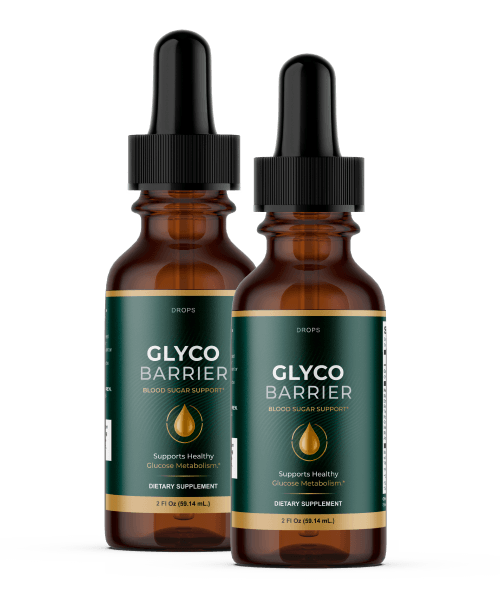
- Chromium picolinate. A mineral studied for how well the body responds to its own insulin. "The door that wouldn't open," she said.
- Gymnema sylvestre leaf. A traditional herb for healthy glucose metabolism and for quieting sweet cravings.
- Green tea leaf. Antioxidants and gentle metabolic support.
- Coleus forskohlii root. Supports how the body uses stored fuel.
- Maca root. Traditionally used for steadier energy.
What she noticed, and when
- Weeks 1 and 2. Drops morning and evening, same metformin, same walks. Nothing to report except fewer bathroom trips, because she'd put the jug away.
- Weeks 3 to 6. Her morning numbers, stuck in the 140s, started showing up in the 120s most days.
- Month 2. The evening readings came down with them. The 196 hasn't come back.
- Month 3. Her A1c recheck is in December. She already told Yolanda the coffee is on her if it moves.
Why so slow? Because your A1c is built from about three months of blood, and anything aimed at how your body uses insulin between meals needs weeks before the lab can see it. Results vary from person to person, and some people will still need more help from their doctor.
Before you watch: who this is for
It may be for you if you have type 2 or prediabetes, you're already drinking water, walking and eating sensibly, and your fasting and evening numbers still won't come down.
Talk to your doctor first if you take insulin or any medicine that lowers blood sugar, you're pregnant or nursing, you have kidney or liver problems, or your readings are running very high. The order page shows a 60-day satisfaction promise from the date of purchase.
A gallon of water a day bought Dolores eleven bathroom trips and the same 196. If your meter looks like hers, this is where she found the rest.
See what replaced the pink jugP.S. Dolores kept the pink jug. It waters her tomatoes now. She still walks after lunch, still drinks her water, and still meets Yolanda every other Friday. If you're filling a jug tonight hoping to flush out a number that won't move, watch what Yolanda sent her first.
Further Reading
The One Meal Blood Sugar Fix
Loretta's suppers got better. Her A1c came back exactly the same
What Is A1c, Really?
Why the meter and the lab sheet disagree, and which one is telling the truth
Sources: American Diabetes Association, Standards of Care in Diabetes, 2026. Continuous glucose monitoring in adults with type 2 diabetes not using insulin (CONNECT trial), presented at the ADA Scientific Sessions, June 2026.
Medical Disclaimer: This article is for informational purposes only and does not constitute medical advice. Results vary. Statements about supplements have not been evaluated by the Food and Drug Administration, and supplements are not intended to diagnose, treat, cure or prevent any disease. Consult your healthcare provider before making changes to your health routine or medications.