The One Meal Blood Sugar Fix: Loretta Changed Her Supper and Watched Her 230s Turn Into 160s. Then Her A1c Came Back Exactly the Same
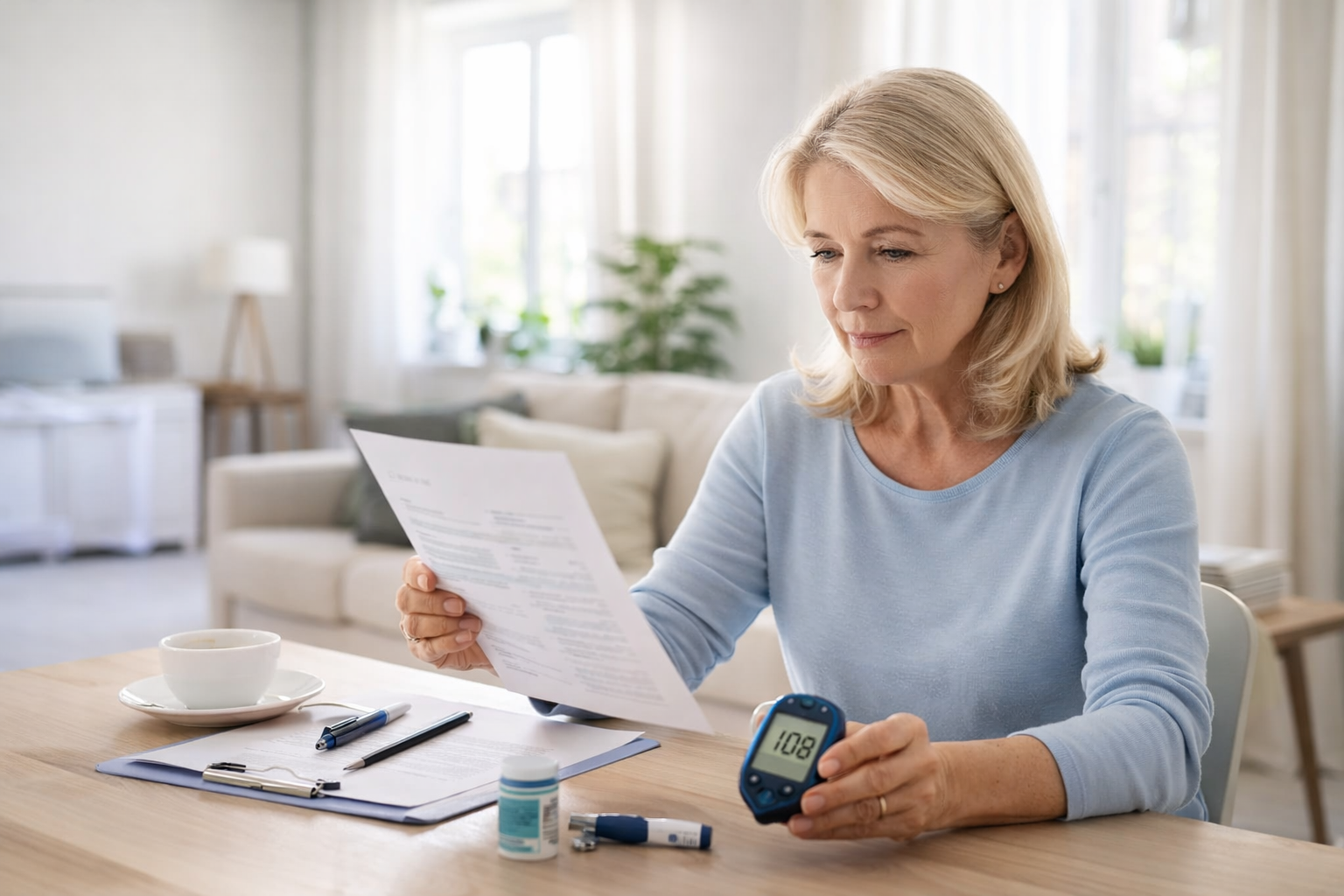
Does a one meal blood sugar fix work? Fixing your worst meal can shrink the spike after that meal, often by a lot: eat the vegetables and protein first, cut the starch portion, and walk for ten minutes after. But your A1c is an average of every hour for about three months, so one better meal usually moves it only a little. If the spikes shrink and the A1c doesn't, something is driving your numbers between meals, and that's worth a conversation with your doctor.
Loretta, 64, a retired church secretary in Shreveport, Louisiana, found the one meal blood sugar fix the way most of us find things now: a video on her phone at 11 at night. The idea was simple. Don't overhaul your whole life. Find your single worst meal, fix that one, and watch your numbers come down.
She knew exactly which meal it was. Supper. Rice with everything, cornbread on Sundays, a glass of sweet tea she'd been drinking since she was nine. Her meter after supper routinely read in the 230s.
So she fixed it. Half the rice. Greens and chicken first, rice last. The sweet tea became unsweet with lemon, which she called "a crime against Louisiana." And every night after the dishes she walked to the end of her street and back.
It worked. Within two weeks her after-supper readings were in the 160s. She was so proud she screenshotted her meter and sent it to her sister. Three months later her doctor called with her A1c: 7.2. The same number as the visit before.
What fixing one meal really does
Loretta didn't imagine the improvement. Fixing a meal works, on that meal:
- Order matters. Eating vegetables and protein before the starch tends to blunt the rise that follows.
- Portion matters. Half the rice is less sugar arriving at once.
- A walk after matters. Working muscles pull sugar out of the blood without needing insulin.
- Drinks matter. Sweet tea and soda are among the fastest ways to spike.
Research keeps pointing at this. A trial in the New England Journal of Medicine, reported this month by the University of Colorado, gave adults with type 2 who don't use insulin a continuous glucose sensor in primary care, and seeing what each meal did was part of why their numbers improved. Meals are visible. That's what makes them so satisfying to fix.
Why the A1c didn't move
Your A1c measures how much sugar has stuck to your red blood cells over roughly the last three months. It counts every hour, not just the two after supper. Loretta's fix shaved two hours a day. The other twenty-two stayed the same: the slow rise through the night, the morning number that was already 140 before she ate a bite, the afternoon drift.
And there was something else she noticed and didn't connect. She was eating less at supper, and she was hungrier than ever by 9 p.m. Standing at the open refrigerator. "Like my body never got the message that I'd eaten," she said.
That turns out to be the clue. The "I'm full" message and the "use your insulin now" message travel on the same natural signal in your body, a gut hormone called GLP-1. It's the signal the famous weight-loss shots imitate. When your own version of it fades, two things happen together: the hunger gets louder, and the insulin you make doesn't get used as well. You can fix every plate on the table and still be fighting that.
If your spikes shrank and your A1c didn't, a physician explains what may be happening in the hours between meals.
See what one plate can't reachThe neighbor with the olive oil
Loretta's neighbor across the street, Bernice, is 70 and has had type 2 since the nineties. She saw Loretta walking every night and finally came out on her porch to ask. Loretta told her about the supper, the 160s, and the 7.2. Bernice nodded like she'd heard it before. "I fixed my breakfast for a whole year," she said. "Same thing. You're doing the right things to the wrong part."
Bernice sent her a presentation from a physician with thirty years in practice who had watched someone in his own family follow every instruction and still climb. In it, he talks about supporting the body's own natural GLP-1 signal instead of only chasing the number, and a short morning ritual he built around it using an olive oil that's mentioned dozens of times in Scripture, plus a few ordinary kitchen ingredients.
Here's the part that stopped Loretta. She had olive oil. She'd even tried a spoonful with cinnamon after seeing it online. According to him, that's not it: which oil, what goes with it, and when you take it are the whole difference, and he explains why the honey-and-cinnamon version people pass around is something else entirely. We'll leave that to him.
Already have olive oil in your pantry? Bernice did too. This is the explanation she sent across the street.
Watch the olive oil ritual Bernice sharedBefore you add anything
Keep the better supper. Keep the walk. Keep your medicine exactly as prescribed. If you take insulin or a pill that can cause lows, talk to your doctor before adding anything that may lower blood sugar, and check more often for the first few weeks.
What sits next to Loretta's meter now
At the end of the presentation, the physician talks about a supplement made to support the body's own blood sugar balance through the day and night, including the hours a single meal never touches. Loretta read the label at her kitchen table with a pen, the way she used to proofread the Sunday bulletin, and took it to her pharmacist before she opened it. It was Glyco Barrier.
- Chromium picolinate. Studied for how well the body responds to its own insulin. She wrote "the other 22 hours" next to it.
- Gymnema sylvestre leaf. A traditional herb for healthy glucose metabolism, long linked to quieting the pull toward sweets. "9 p.m. fridge," she wrote.
- Green tea leaf. Antioxidants and gentle metabolic support.
- Coleus forskohlii root. Supports how the body uses stored fuel.
- Maca root. Traditionally used for steadier energy.
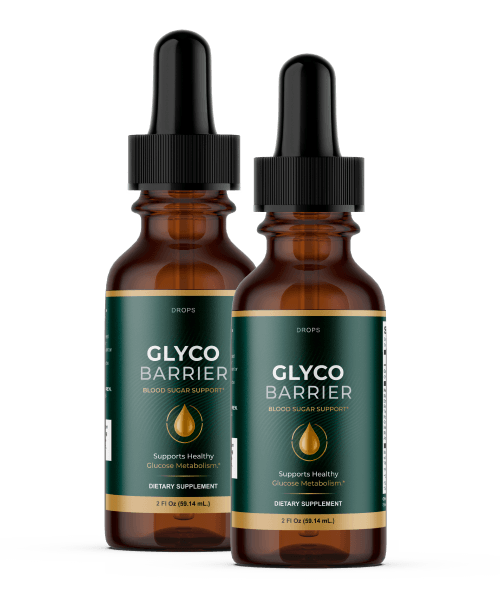
- Week 1. Same supper, same walk, drops morning and evening. Nothing she'd swear to.
- Weeks 2 and 3. The 9 p.m. trip to the refrigerator got shorter, then skipped. She noticed it before she noticed any number.
- Month 1. Her morning reading, stuck around 140 for a year, started landing in the 120s most days.
- Months 2 and 3. The stretch her next A1c will be built from. She has the recheck circled for January and isn't celebrating early.
Before you watch: who this is for
It may be for you if you have type 2 or prediabetes, you've already fixed your worst meal and seen the spikes shrink, and your A1c or your morning numbers still won't follow, especially if you're hungrier at night than you used to be.
Talk to your doctor first if you take insulin or any medicine that lowers blood sugar, you're pregnant or nursing, you have kidney or liver problems, or your readings are running very high. The order page shows a 60-day satisfaction promise from the date of purchase.
One fixed meal bought Loretta two good hours a day. If your lab sheet looks like hers, this is where she found the rest.
See what's next to Loretta's meterP.S. Loretta still eats the greens first and still walks to the end of the street every night. She still says unsweet tea is a crime. She just stopped expecting one plate to carry a whole day. If you're holding a lab sheet tonight that doesn't match your beautiful after-supper numbers, start with what Bernice sent her.
Further Reading
What Is A1c, Really?
Why the meter and the lab sheet disagree, and which one is telling the truth
Olive Oil and Cinnamon for Diabetes
Six weeks of the morning spoon, and the question it never answered
Sources: Continuous glucose monitoring in adults with type 2 diabetes not using insulin in primary care, New England Journal of Medicine, reported by University of Colorado Anschutz via Medical Xpress, October 17, 2026. American Diabetes Association, Standards of Care in Diabetes, 2026.
Medical Disclaimer: This article is for informational purposes only and does not constitute medical advice. Results vary. Statements about supplements have not been evaluated by the Food and Drug Administration, and supplements are not intended to diagnose, treat, cure or prevent any disease. Consult your healthcare provider before making changes to your health routine or medications.