How to Reduce A1c Before Your Doctor Says "Insulin": Frank Had Six Months and a Number That Kept Climbing. Here's What He Learned

How do you reduce A1c? Steady, everyday changes do most of the work: meals built around protein, vegetables and fiber, a short walk after eating, regular sleep, a little weight off, and taking your medicines as prescribed. Because A1c reflects about three months of blood sugar, give any change a full three months before judging it. If your number keeps climbing while you do all of that, the useful question isn't "what else can I cut?" but "why isn't my body using the insulin it already has?"
Frank, 64, drove a propane delivery truck around Fort Wayne, Indiana, for twenty-nine years. He's had type 2 for nine of them. Two pills, every morning, never missed. In September his A1c came back 8.4. It had been 7.6 a year earlier. His doctor, who he likes, looked at him over her glasses and said that if they couldn't reduce his A1c by the next draw in March, it was time to talk about insulin.
Frank's father was on insulin for the last eleven years of his life. Frank gave him the shots when his hands got too shaky. "I know exactly what that refrigerator door looks like," he told us. "The little box of pens next to the butter. I'm not ready for that box."
So he went home and typed into his phone, with his reading glasses pushed up on his forehead, how to reduce a1c. This is what he found, what he did with it, and the question he wishes someone had asked him in year one.
What actually brings an A1c down
Frank's doctor gave him the standard list, and we'll repeat it here because it's good advice that works for a lot of people:
- Plate first, then portions. Half vegetables, a quarter protein, a quarter slow carbs like beans or oats. Fiber before starch.
- A ten-minute walk after meals. Walking right after eating blunts the rise when it happens. It beats one long walk at night.
- Sleep. Short nights raise next-day readings and next-day cravings. Same bedtime, most nights.
- Medicines, on time. Never stop or cut a prescription on your own.
- Give it three months. An A1c is a running average of roughly three months. Daily meter readings tell you the direction long before the lab does.
Frank had done most of that list, honestly. Not perfectly, but most of it. That's what scared him. "If I was eating donuts in the truck, I'd know what to fix. I'm not. And the number goes up anyway."
The month he tried to outrun it
He did what a lot of men do with a deadline. He went to war with his plate. No bread, no potatoes, no fruit, black coffee until noon. He walked the neighborhood every evening until his knees complained. The first two weeks, his morning readings dropped from the 170s into the 140s, and he called his daughter to brag.
Then the evenings started. By 8 p.m. he was standing in front of the open refrigerator, staring past his wife's yogurt at the leftover lasagna like it owed him money. Some nights he won. Some nights he ate it cold with a fork, standing up. His readings drifted right back up into the 160s. "I had a deadline," he said, "and my own stomach was working for the other team."
If your doctor has started saying "insulin" and your evenings keep undoing your mornings, there may be a reason nobody has explained.
See what a physician says is behind the pullThe signal his plan never looked at
Here's the part of the A1c story that almost never makes it onto the handout. When you eat, your gut sends out a messenger that does two jobs at the same time. It tells your pancreas to release insulin at the right moment, and it tells your brain you've had enough. That messenger is GLP-1. Most people only know the name from the weekly-shot commercials, but your body makes its own, every meal.
When that natural signal fades, two things tend to go wrong together. The insulin your body already makes doesn't get used as well, so the number climbs even on a careful day. And the "I'm full" message gets quiet, so the evening cravings get loud. Starve yourself on top of that, the way Frank did, and you turn the hunger up further. That's the refrigerator door at 8 p.m. It was never a willpower problem, and Frank, who once drove a full propane truck through an ice storm, is not short on willpower.
That's also why "cut more" stops working for so many people around year eight or nine. Cutting works on what goes in. It doesn't ask why the body stopped responding to what it already has.
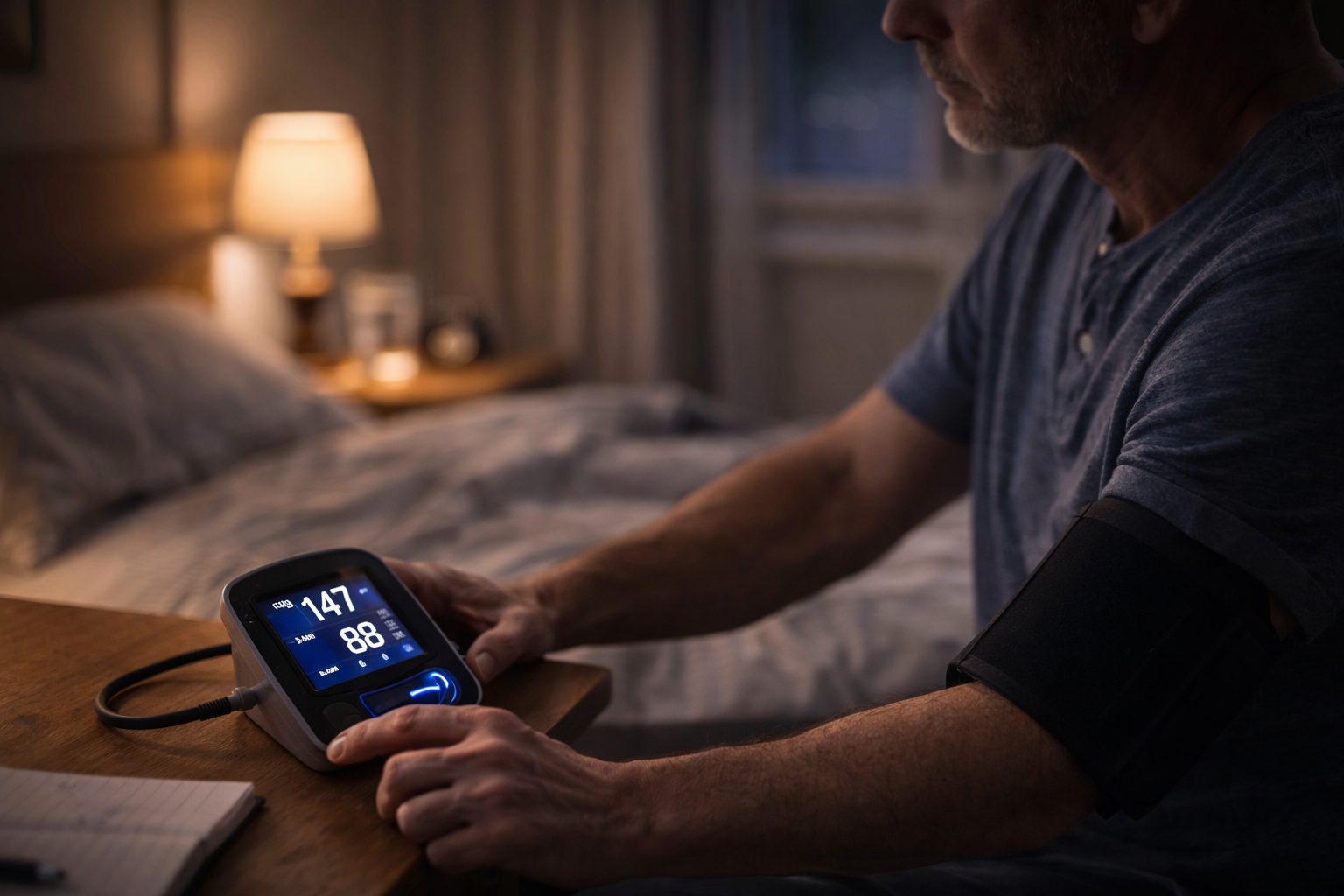
The presentation his son-in-law sent
The answer came from Frank's son-in-law, Marcus, a pharmacist in Indianapolis, who heard the insulin story at Sunday dinner and didn't say much. That night he texted Frank a link with one line: "Before March. Watch the whole thing."
It was a presentation from a physician with three decades in medicine whose own wife did everything her doctors told her for years and still ended up in the hospital, her number climbing. He talks about the night he stopped asking how to replace what her body wasn't doing and started asking what was stopping it from doing it on its own. He explains what he believes is quietly interfering with that natural signal, why it doesn't show up on routine bloodwork, and the short morning ritual he built around an oil, including which kind he uses and why the bottle on most grocery shelves isn't it.
We won't give his ritual away here. It makes more sense in his words than in ours. Frank watched it at the kitchen table with his notebook open and wrote one sentence at the bottom of the page: "The hunger and the number are the same wire."
Six months is enough time to understand your own body before anybody hands you a box of pens. This is the hour Marcus told Frank to watch.
Watch the explanation Marcus sent before MarchBefore you add anything
Keep your medicines and your appointments. If you take insulin or a pill that can cause lows, ask before cutting food hard or adding anything new, natural or not, because some things stack with your medicine. And if your readings are running very high with heavy thirst, weight loss you didn't try for, or blurry vision, call your doctor now, not in March.
What sits next to Frank's notebook
At the end of the presentation is a dropper bottle made to support the body's own blood sugar balance between meals, which is exactly where Frank's 8 p.m. refrigerator standoff lived. The one next to his notebook is Glyco Barrier.
He didn't order it that night. He sent a photo of the label to Marcus first, then took it to his doctor's nurse line. Both said nothing on it should conflict with his two pills, and his doctor asked him to keep logging his readings so they'd both see what changed by March.
- Chromium picolinate. Studied for how well the body responds to its own insulin. "That's the part I'm trying to save," he wrote next to it.
- Gymnema sylvestre leaf. A traditional herb for healthy glucose metabolism, long linked to quieting the pull toward sweets. He wrote "8 p.m." beside it.
- Green tea leaf. Antioxidants and gentle metabolic support.
- Coleus forskohlii root. Supports how the body uses stored fuel.
- Maca root. Traditionally used for steadier afternoon energy.
He put the bread back, a slice at a time, the way the nurse educator told him to. And he kept the walks, but after meals instead of one punishing march at night.
- Week 1. Drops morning and evening. Nothing to report except that the lasagna survived until Thursday.
- Weeks 2 and 3. The 8 p.m. standoff got shorter. Some nights he closed the refrigerator and forgot why he'd opened it.
- Month 1. Morning readings mostly in the 130s, the lowest run he'd had in two years.
- Months 2 and 3. This is the stretch his March A1c is built from. He's not counting on one good week, and he told us so.
Why so gradual? Because an A1c reflects about three months of blood, and a quiet signal doesn't come back in a week. Individual results vary, and plenty of people need insulin no matter how hard they work. There is no shame in that box. Frank just wants to be sure he's earned it.

Before you watch: who this is for
It may be for you if you have type 2 or prediabetes, your number keeps creeping up even while you follow the plan, and your evenings feel like they undo your mornings.
Talk to your doctor first if you take insulin or any medicine that lowers blood sugar, you're pregnant or nursing, you have kidney or liver problems, or your readings are running very high with heavy thirst or blurry vision. The order page shows a 60-day satisfaction promise from the date of purchase.
The recheck is coming either way. Spend the months before it understanding why the number climbs.
See what's next to Frank's notebookP.S. Frank moved his father's old pill organizer from the junk drawer to the shelf above the coffee maker, next to the drops. "So I remember what I'm doing this for." If you're standing in front of an open refrigerator tonight with a deadline on the calendar, watch what Marcus sent Frank.
Further Reading
The Biblical Olive Oil Drink for Diabetes
A Bible study, a recipe card and the verse everyone skipped
Ceylon Cinnamon for Blood Sugar
What the kind of cinnamon changes, and what it doesn't
Sources: American Diabetes Association. Standards of Care in Diabetes. Reynolds AN, et al. Advice to walk after meals is more effective for lowering postprandial glycaemia in type 2 diabetes mellitus. Diabetologia, 2016. Nauck MA, Meier JJ. Incretin hormones: their role in health and disease. Diabetes, Obesity and Metabolism, 2018. Reader accounts are shared with permission; names and some details have been changed. The views of the physician featured in the presentation are his own and have not been independently verified by MetabolicDaily.
Medical Disclaimer: This article is for informational purposes only and does not constitute medical advice. Results vary. Statements about supplements have not been evaluated by the Food and Drug Administration, and supplements are not intended to diagnose, treat, cure or prevent any disease. Consult your healthcare provider before starting any supplement, especially if you take medication for blood sugar.