Olive Oil and Cinnamon for Diabetes: Walt Stirred the Two Together Every Morning for Six Weeks. Here's What His Meter Said, and What It Didn't
Is olive oil and cinnamon good for diabetes? Each one has some research behind it. Extra virgin olive oil, used as your everyday fat, is linked to lower type 2 risk over the long run, and cinnamon has shown small, inconsistent drops in fasting sugar in some trials. Together they make a reasonable kitchen habit, not a treatment, and the common grocery-store cinnamon carries a liver warning at high doses. What the mix can't tell you is which oil, at what time, and what it is actually supposed to be helping your body do.
Walt, 67, taught high school shop in Knoxville, Tennessee, for thirty-one years. Type 2 for seven of them, metformin twice a day, a meter he checks before coffee because Darlene, his wife, makes him. In August a man from his Wednesday men's breakfast passed his phone across the table. It was a video of a woman stirring a spoon of cinnamon into a spoon of olive oil, drinking it down, and holding up her meter like a trophy.
"She said her number dropped forty points," Walt told us. "I've been around long enough to know you don't believe a forty-point anything. But it was two things I already had in the cabinet. So what's the harm?"
That night he typed it into the search bar on his tablet, one finger at a time: olive oil and cinnamon for diabetes. This is what the research actually says about each half of that spoon, what six weeks of it did to Walt's log, and the question it left sitting on his kitchen table.
The olive oil half: a 20-year study says it matters
The freshest evidence came out this summer. A Greek research team followed 2,000 adults who had no diabetes and no heart disease at the start, for twenty years. The paper, published online on July 25, 2026 in the International Journal of Food Sciences and Nutrition, sorted people by the fat they cooked with. Those who used olive oil and nothing else had about half the odds of developing type 2 over those two decades compared with people who didn't use it, and the link was even stronger in people who were overweight.
That's encouraging, and it's also worth reading carefully. It's an observational study, so it shows an association, not proof. And it measured a lifetime pantry habit in people who didn't have diabetes yet, not one spoonful a morning in someone who already does. Older trial reviews have found modest A1c improvements when olive oil replaces other fats, mostly credited to the polyphenols in extra virgin oil, the bitter, peppery part.
The cinnamon half: small effects and a real warning
Cinnamon has been studied for decades. Some trials show fasting sugar dropping a little, others show nothing, and the effect on A1c is usually small. Most researchers land on "maybe a nudge, not a solution."
The part almost nobody puts in the viral videos: most grocery-store cinnamon is cassia, which contains a compound called coumarin. In large daily amounts, coumarin can strain the liver, and a heaping teaspoon of cassia a day can get close to the limit European food regulators set for an average adult. Walt was using the big plastic jar from the warehouse store, and he was not using a level spoon.

What six weeks of the spoon did
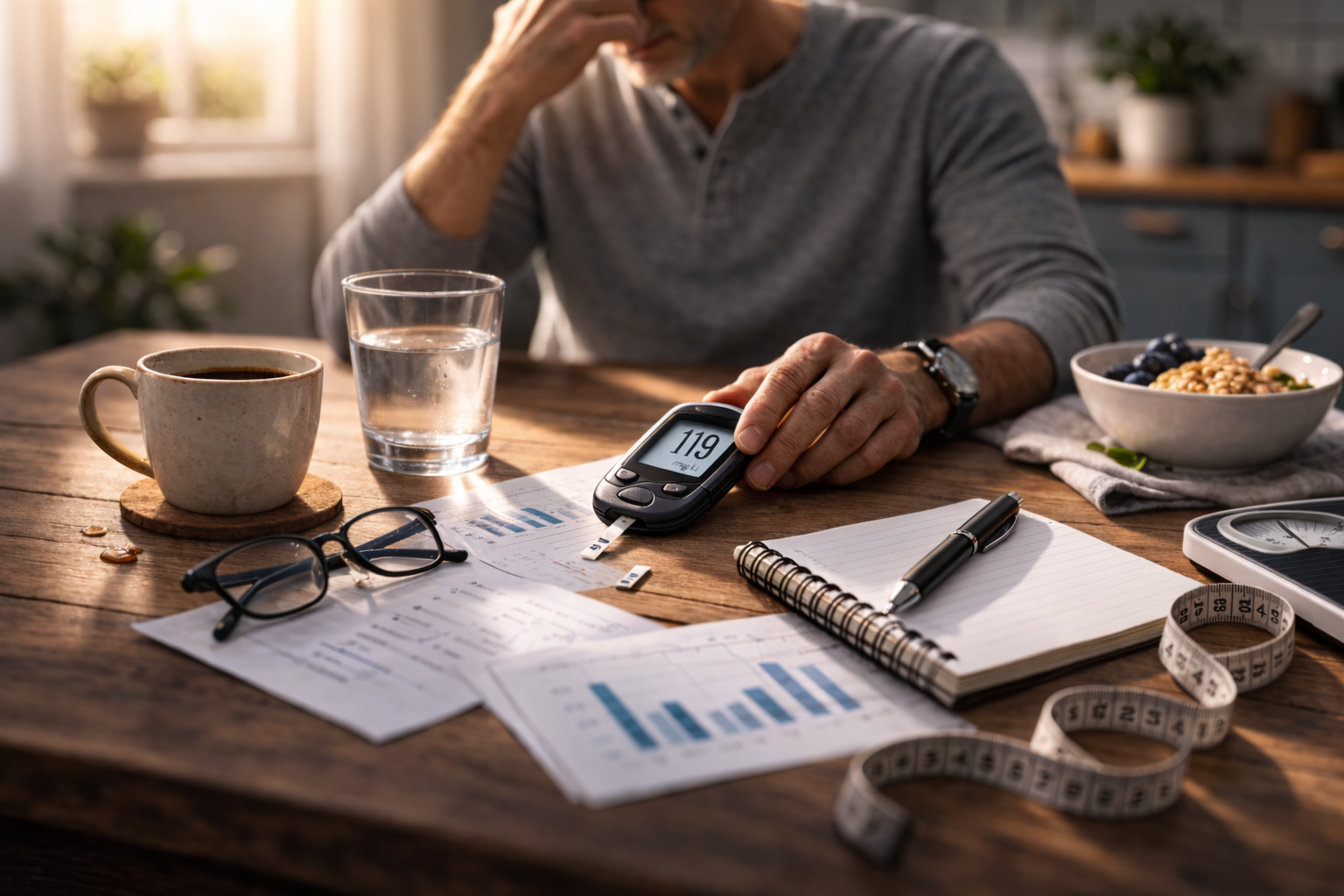
Walt kept a log, because he is a shop teacher and shop teachers measure twice. His morning readings had been averaging around 152. By the end of week two they were averaging 144. He called his granddaughter to tell her.
Then it stopped. Weeks three through six, the mornings sat in the low 140s and didn't budge, no matter how carefully he measured the spoon. And the evenings didn't change at all. Two hours after supper he was still in the 180s some nights, and still standing at the pantry at 9 p.m. looking for something sweet, which made him feel foolish for a man drinking cinnamon at breakfast.
"It was like putting a new filter on a furnace that's got a bad thermostat," he said. "Air's a little cleaner. House is still cold."
If the morning mix helped a little and then quit, there may be a reason the spoon was never built to reach.
See what a physician says the mix is missingThe question the spoon never answers
Walt's granddaughter Kayla, a dental hygienist in Nashville, asked him the question that changed how he looked at it: "Grandpa, what is it supposed to be helping? Like, which part of you?"
He didn't know. Neither did the video. Olive oil and cinnamon are both aimed at the number. Neither recipe says a word about why the number keeps creeping up when you're already doing things right. And that "why" usually lives in a signal, not in a spoon.
When you eat, your gut releases a messenger called GLP-1. It does two jobs at once: it tells your pancreas when to release insulin, and it tells your brain you've had enough. Most people only know the name from the weekly injection commercials, but your body has always made its own. When that natural signal runs low, the insulin you make doesn't get used as well, so the number drifts up on a careful day. And the "I'm full" message gets quiet, which is exactly what Walt's 9 p.m. pantry trips felt like. Two jobs, one wire. A morning spoon of anything doesn't tell you whether that wire is working.
Which leaves three questions the viral mix never touches: which oil, if any, when in the day it would matter, and what it's supposed to be supporting. Those are the three questions Kayla's link was about.
The presentation Kayla sent
It was a presentation from a physician with three decades in practice. His own wife followed every instruction her doctors gave her for years, and her A1c kept climbing until she was admitted to the hospital. He describes the night he stopped asking how to replace what her body wasn't doing, and started asking what was keeping it from doing it on its own.
He starts from a study of identical twins, same genes, same upbringing, where one twin developed type 2 and the other didn't, and he walks through what he believes quietly interferes with that natural signal. He also explains why the cinnamon kitchen recipes going around aren't what he does, which oil he actually uses, and why the time of day matters.
We're not going to give his routine away here. It makes more sense in his words. Walt watched it twice, the second time with Darlene and the log book open. At the bottom of the week-six page he wrote: "Wrong question. Not what to drink. What stopped working."
If you've been measuring the spoon carefully and the number still won't move, this is the hour Kayla asked Walt to give himself.
Watch the explanation Kayla sent her grandpaBefore you add anything
Keep your medicines and your appointments. Cinnamon can add to the effect of blood sugar medicine, so if you take insulin or a pill that can cause lows, ask before starting it. Skip high-dose cassia if you have liver problems or take a blood thinner. A tablespoon of olive oil is about 120 calories, so it works best replacing another fat, not stacked on top. And if your readings are running very high with heavy thirst, blurry vision or weight loss you didn't try for, call your doctor today.
What sits next to Walt's coffee maker now
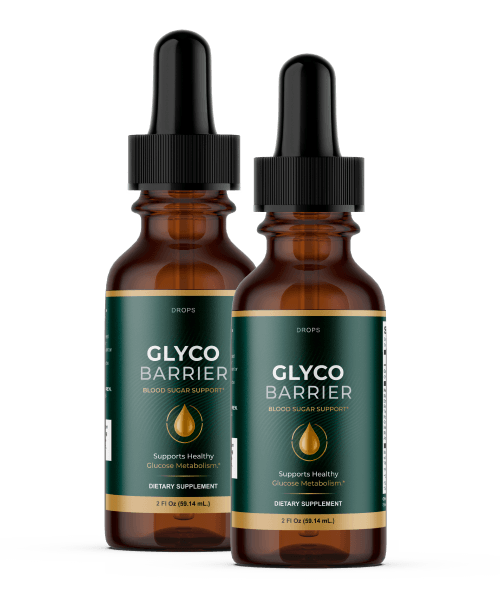
At the end of the presentation is a dropper bottle made to support the body's own blood sugar balance, including the stretch between meals where Walt's evenings fell apart. The one next to his coffee maker is Glyco Barrier.
He didn't order it on the spot. He read the label at the table with his reading glasses on the end of his nose, the way he used to read a lumber invoice, then called his pharmacy to ask whether anything on it would fight with his metformin. They said no, and told him to keep logging.
- Chromium picolinate. Studied for how well the body responds to its own insulin. He underlined it twice.
- Gymnema sylvestre leaf. A traditional herb for healthy glucose metabolism, long associated with quieting the pull toward sweets. He wrote "9 p.m. pantry" next to it.
- Green tea leaf. Antioxidants and gentle metabolic support.
- Coleus forskohlii root. Supports how the body uses stored fuel.
- Maca root. Traditionally used for steadier afternoon energy.
The cassia jar went in the trash. He kept good olive oil on the table for cooking, the way it was meant to be used, and stopped drinking it off a spoon.
- Week 1. Drops morning and evening. Nothing to report. "Didn't expect anything. Wrote that down too."
- Weeks 2 and 3. The pantry trips got shorter. Two nights in a row he turned off the kitchen light without opening the cabinet.
- Month 1. Mornings mostly in the 130s, and the after-supper numbers came down out of the 180s on most nights.
- Months 2 and 3. This is the stretch his next A1c is built from. He's not celebrating one good week, and he made a point of telling us that.
Why so slow? An A1c reflects about three months of blood, and a signal that faded over years doesn't come back in a week. Individual results vary, and some people will need more help from their doctor no matter what they do.
Before you watch: who this is for
It may be for you if you have type 2 or prediabetes, you've tried the kitchen remedies and got a small bump that faded, and your evenings or your cravings keep undoing your mornings.
Talk to your doctor first if you take insulin or any medicine that lowers blood sugar, you take a blood thinner, you're pregnant or nursing, you have kidney or liver problems, or your readings are running very high. The order page shows a 60-day satisfaction promise from the date of purchase.
The spoon was a fine start. If you want to know what it was never going to reach, this is where Walt found out.
See what replaced the cinnamon jarP.S. Walt still goes to the Wednesday breakfast. Last week the same man passed his phone across the table with a new video, honey and cinnamon this time. Walt slid it back and said, "Ask what it's supposed to be helping." If you've got a spoon and a jar on your counter right now, watch what Kayla sent before you measure another one.
Further Reading
Ceylon Cinnamon for Blood Sugar
What the kind of cinnamon changes, and what it doesn't
Olive Oil Drink for Diabetes
Four months of the viral morning glass, and what was in the bottle
Sources: Kechagia I, et al. Exclusive olive oil use is associated with lower 20-year cumulative type 2 diabetes incidence across BMI categories and Mediterranean diet adherence trajectories in ATTICA study. International Journal of Food Sciences and Nutrition, 2026;77(5):498-509 (published online July 25, 2026). Schwingshackl L, et al. Olive oil in the prevention and management of type 2 diabetes mellitus. Nutrition & Diabetes, 2017. European Food Safety Authority. Coumarin in flavourings and other food ingredients with flavouring properties, 2008. Nauck MA, Meier JJ. Incretin hormones: their role in health and disease. Diabetes, Obesity and Metabolism, 2018. Reader accounts are shared with permission; names and some details have been changed. The views of the physician featured in the presentation are his own and have not been independently verified by MetabolicDaily.
Medical Disclaimer: This article is for informational purposes only and does not constitute medical advice. Results vary. Statements about supplements have not been evaluated by the Food and Drug Administration, and supplements are not intended to diagnose, treat, cure or prevent any disease. Consult your healthcare provider before starting any supplement, especially if you take medication for blood sugar.